
 Schedule a Consultation!
Installing epoxy flooring over existing tile is possible under the right conditions—discover the critical surface preparation requirements, bonding considerations, and proven alternatives that deliver lasting results without demolition.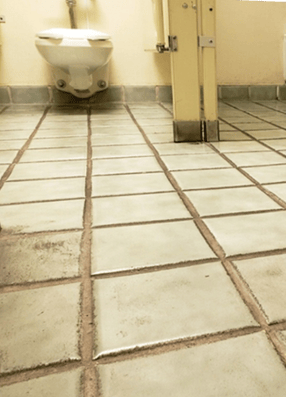
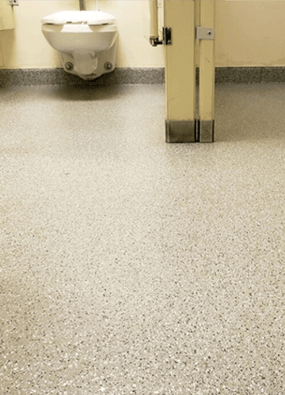
Understanding Epoxy Application Over Existing Tile Surfaces
Facility managers and property decision-makers facing deteriorating tile surfaces often ask a critical question: Can you install epoxy flooring over existing tile? The short answer is yes—but only when specific conditions are met. Epoxy and resinous flooring systems can sometimes be applied directly over existing tile without full demolition, but success depends entirely on the structural integrity of the substrate, proper surface preparation, and selecting the right coating system for your environment.
Epoxy over tile is not a universal solution. The existing tile must be structurally sound, properly bonded to the substrate, completely dry, and free from contaminants that would interfere with adhesion. When these conditions are present, coating over tile can deliver a seamless, durable, and hygienic surface that extends the life of your floors without the downtime, cost, and waste associated with full replacement.
The decision to coat over tile versus replacing it requires a systematic evaluation. Loose tiles, hollow-sounding areas, significant cracking, moisture intrusion, or deteriorated grout lines can all compromise the bond between the epoxy system and the tile surface. Without proper assessment and preparation, even the most advanced coating systems will fail prematurely. This is why professional evaluation is essential before committing to any installation method.
For commercial restrooms, locker rooms, showers, kitchens, healthcare facilities, schools, and other high-traffic environments, the stakes are particularly high. These spaces demand surfaces that are not only durable and attractive but also easy to clean, slip-resistant, and able to withstand chemical exposure and constant moisture. Understanding when epoxy over tile is appropriate—and when alternative restoration methods are better suited—protects your investment and ensures long-term performance.
At SaniGLAZE, we specialize in evaluating existing tile, grout, and hard surfaces to determine whether restoration, resurfacing, epoxy flooring, polyaspartic finishes, or seamless floor systems are the right fit for your facility. Our proprietary processes and state-of-the-art products work together in harmony with expert application techniques to deliver superior results backed by two decades of experience in commercial surface restoration.
Critical Surface Preparation Requirements for Tile-to-Epoxy Bonding
Surface preparation is the single most critical factor determining whether an epoxy-over-tile installation will succeed or fail. Even the highest-quality epoxy systems cannot overcome poor substrate conditions or inadequate preparation. Proper bonding requires a clean, dry, mechanically sound surface with sufficient profile to allow the coating to grip effectively.
The first requirement is structural soundness. Every tile must be firmly bonded to the substrate beneath it. Hollow tiles, loose tiles, or tiles with delamination issues will not support an epoxy coating. A simple tap test—lightly tapping each tile with a solid object—can reveal hollow sounds indicating poor adhesion. Any compromised tiles must be removed, the substrate repaired, and the area properly leveled before coating application begins.
Moisture is another critical consideration. Epoxy systems do not bond well to surfaces with active moisture transmission or elevated humidity levels. Conducting moisture vapor emission rate (MVER) testing on concrete substrates is essential, particularly in below-grade applications, basements, or areas exposed to groundwater. If moisture levels exceed manufacturer specifications, a high-performance vapor barrier must be installed before applying the epoxy system.
Surface contamination presents a third major barrier to successful adhesion. Oils, greases, cleaning residues, soap scum, mineral deposits, efflorescence, and old sealers can all prevent proper bonding. Professional-grade contaminant removal using products like BreakDOWN™ Degreaser, Contaminant Remover, or Gel Contaminant Remover ensures that surfaces are chemically clean and ready for coating. In some cases, mechanical preparation such as diamond grinding or shot blasting may be required to open the tile surface and create the necessary profile.
Grout lines add complexity to epoxy-over-tile installations. Deteriorated grout must be repaired or replaced before coating application. Deep grout joints may require additional product to achieve a level surface, and heavily textured tile surfaces may need leveling compounds to create the smooth substrate necessary for a seamless finish. Proper grout preparation using Tile & Grout Prep ensures optimal adhesion and long-term system integrity.
The difference between coating over tile, resurfacing tile, and restoring tile lies in the preparation and system selection. Coating involves applying a protective layer over sound tile. Resurfacing includes leveling and smoothing before coating. Restoration integrates deep cleaning, repair, color enhancement, and advanced protective coatings to return surfaces to better-than-new condition. Each approach requires precise preparation tailored to the existing conditions and intended performance outcomes.
When Tile Condition Makes Epoxy Installation Impractical
Not all tile surfaces are suitable candidates for epoxy coating application. Attempting to install epoxy over compromised tile will result in premature failure, costly repairs, and disruption to facility operations. Recognizing when tile condition makes epoxy installation impractical protects your investment and guides you toward more appropriate restoration or replacement strategies.
Extensive cracking is a clear indicator that epoxy over tile is not advisable. Cracks signal underlying structural movement, substrate failure, or excessive deflection that will continue regardless of the coating applied. Epoxy systems are not designed to bridge structural cracks or prevent further deterioration of damaged substrates. In these cases, full removal and substrate repair are necessary before any new flooring system can be installed.
Widespread loose or hollow tiles indicate adhesion failure between the tile and the substrate. This condition typically results from improper initial installation, moisture intrusion, substrate movement, or adhesive deterioration over time. Coating over loose tiles will not restore structural integrity—instead, the coating will fail along with the tile, often within a short period after installation. Any areas with more than 10-15% loose tiles should be evaluated for full replacement rather than coating.
Active moisture intrusion makes epoxy installation impractical. If water is seeping through grout joints, tile edges, or substrate cracks, applying an epoxy coating will trap moisture beneath the surface, leading to delamination, blistering, and coating failure. Moisture issues must be identified and corrected at the source before any coating system is considered. This may require waterproofing membranes, drainage improvements, or addressing exterior water intrusion.
Severely deteriorated grout lines present another challenge. When grout has crumbled, eroded, or disappeared entirely, the gaps create voids that compromise the structural support of adjacent tiles. Filling deep grout joints requires significant additional material and may still result in an uneven surface. In cases where grout deterioration exceeds 30% of the total surface area, full tile replacement with new grout installation typically provides a more cost-effective and durable solution.
Chemical damage or contamination from certain substances can permanently alter tile surfaces in ways that prevent proper epoxy adhesion. Acidic cleaners, petroleum products, and some industrial chemicals can etch, stain, or chemically modify tile glazes and surfaces. If contamination has penetrated deeply or caused surface degradation, mechanical removal of the affected layer or full tile replacement may be the only viable options.
High deflection or movement in the substrate beneath the tile also makes epoxy installation impractical. Floors with excessive flexing, deflection under load, or structural movement will cause any rigid coating system to crack and fail. Before considering epoxy over tile, substrate stability must be evaluated and corrected through structural reinforcement if necessary. This is particularly critical in older buildings, areas with insufficient support joists, or locations with compromised foundations.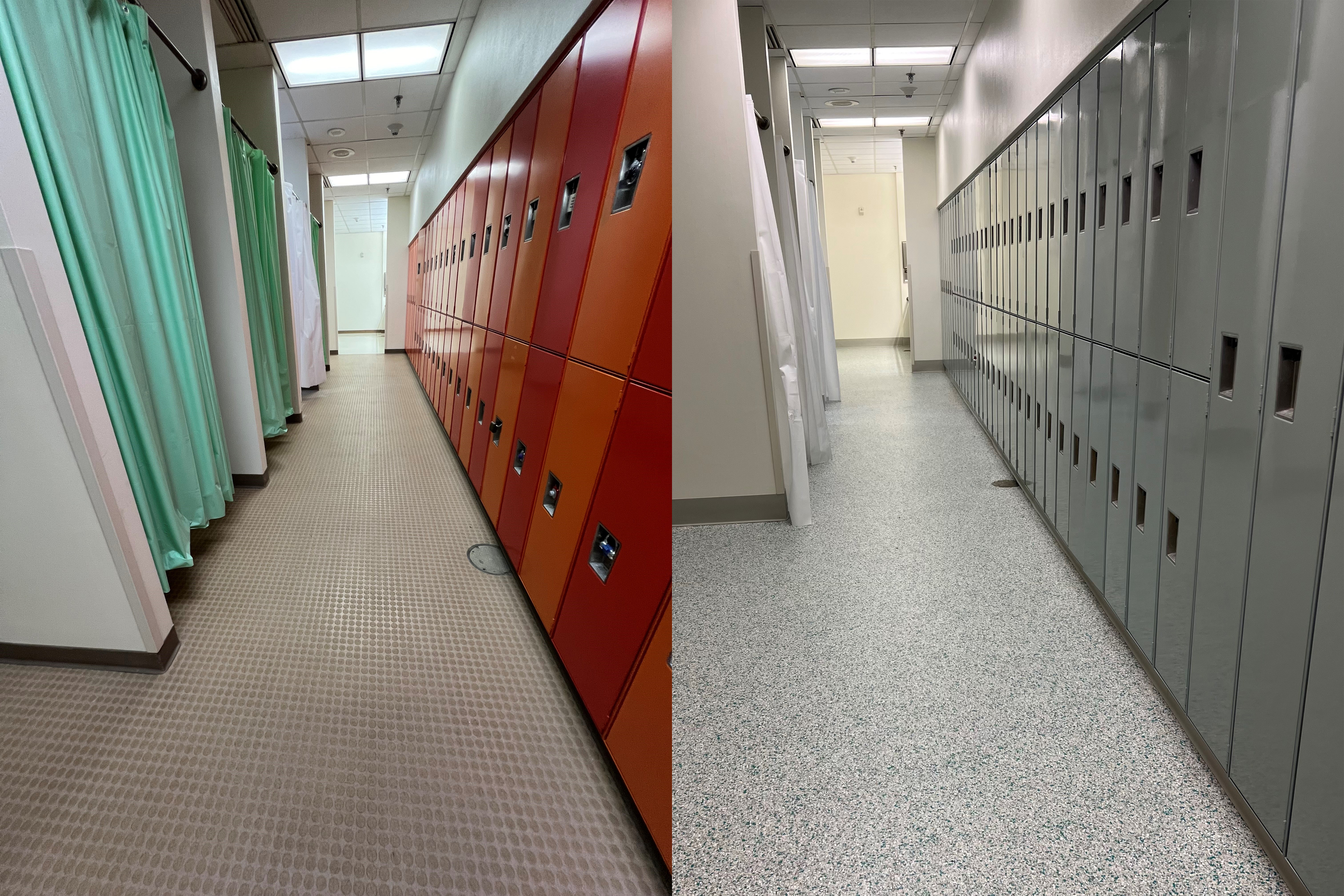
Proven Alternatives to Epoxy for Tile Restoration Without Replacement
When epoxy installation over existing tile is not practical or appropriate, several proven alternative restoration systems can deliver exceptional results without full demolition and replacement. These advanced processes address specific performance requirements while extending surface life, improving aesthetics, and reducing long-term maintenance costs.
EnduraGLAZE™ is SaniGLAZE's flagship hard surface restoration process, designed specifically to restore tile and grout surfaces to like-new condition without replacement. This proprietary Treatment Process penetrates and revitalizes existing tile and grout, eliminating stains, embedded soils, and signs of wear while creating a sealed, durable, and stain-resistant surface. The advanced protective coating adds chemical resistance and moisture protection, making surfaces easier to clean and maintain in demanding commercial environments.
ChromaGLAZE™ offers complete color transformation for facilities seeking to modernize outdated tile surfaces or refresh aging spaces. This innovative coating process allows you to change or restore surface colors with a wide selection of options while providing a durable, chemical-resistant barrier against stains, moisture, and wear. ChromaGLAZE™ delivers a seamless, uniform finish that eliminates the dated appearance of old tile and creates a contemporary aesthetic—all without the cost and disruption of demolition.
VariGLAZE™ and VariGLAZE MAX™ represent advanced restoration systems engineered for environments demanding maximum durability and superior performance. These proprietary processes penetrate deep into porous surfaces, creating moisture-resistant barriers that deliver better-than-new finishes with long-lasting protection. VariGLAZE MAX™ enhances protection with an even stronger, high-performance finish designed for facilities exposed to heavy traffic, harsh cleaning agents, and constant wear.
For facilities where grout condition is the primary concern, GroutGLAZE™ provides specialized protection that permanently bonds to porous grout lines. This premium coating system creates a smooth, non-porous barrier that resists staining, repels moisture, and simplifies cleaning by sealing grout at the molecular level. GroutGLAZE™ restores grout to uniform, like-new appearance while preventing moisture absorption that leads to mold, mildew, and bacterial growth.
SurfaceGLAZE™ addresses non-porous surfaces such as countertops, vanity tops, partitions, wall panels, fiberglass, and acrylic surfaces that require protective restoration. This advanced coating system forms a durable barrier that rejuvenates worn finishes, protects against damage, and simplifies ongoing maintenance. SurfaceGLAZE™ is ideal for comprehensive restroom renovations where multiple surface types require coordinated restoration.
Polyaspartic HS represents a high-strength, fast-curing alternative to traditional epoxy systems. Engineered for superior abrasion, chemical, and impact resistance, Polyaspartic HS minimizes downtime with quick-dry technology while providing a smooth, seamless finish. This system is particularly effective in high-traffic commercial spaces requiring rapid turnaround and immediate return to service.
Each of these restoration alternatives integrates with complementary SaniGLAZE products and processes to create comprehensive surface systems tailored to specific facility needs. SaniMAX™ and SaniMAX-C™ add antimicrobial protection for healthcare environments and other facilities requiring strict hygiene standards. SaniGRIP™ improves slip resistance without compromising appearance. SaniTECH II™ topcoats in gloss, semi-gloss, and flat finishes provide customized aesthetics and performance. This systematic integration ensures that every component works together in harmony to deliver optimal results.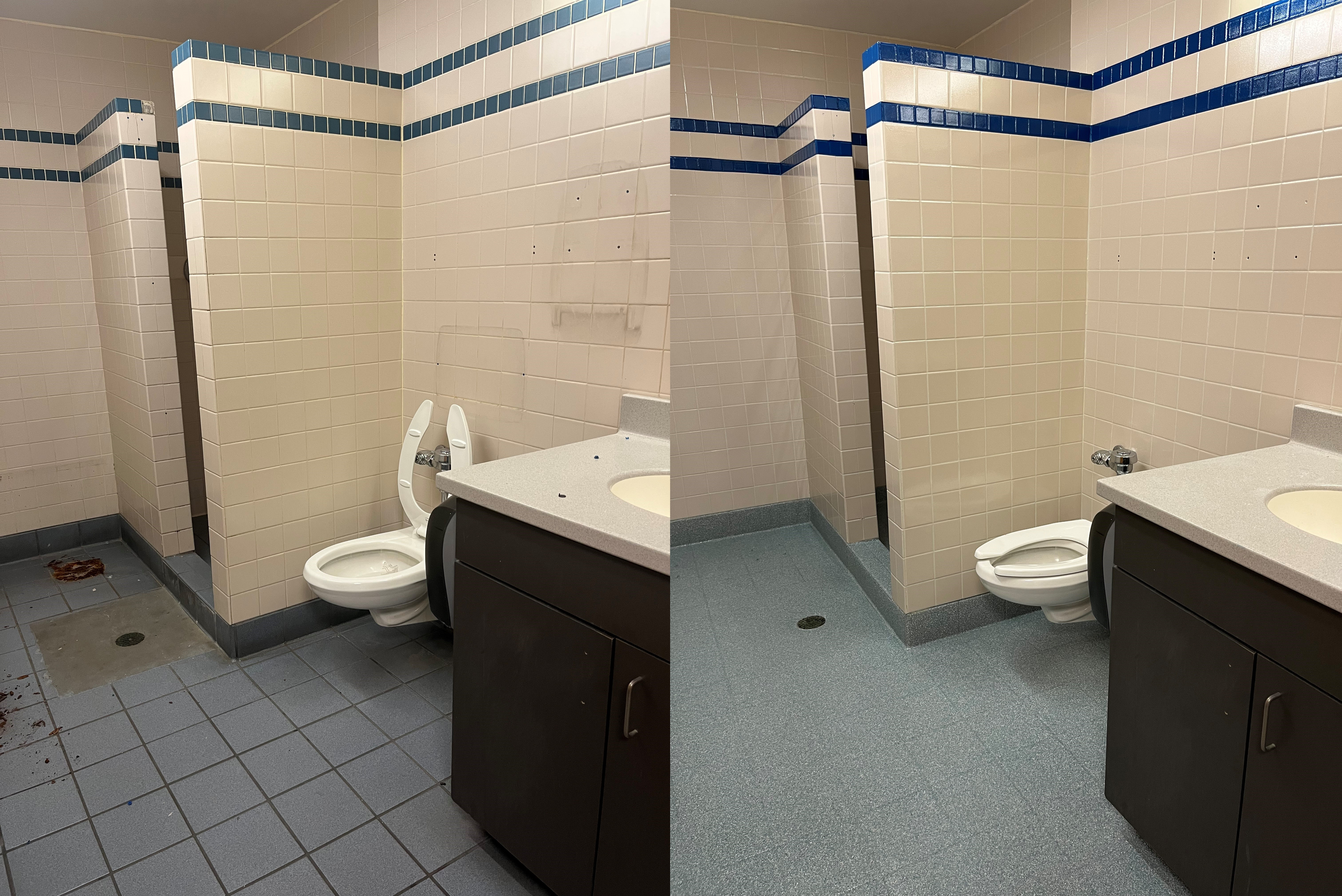
How Professional Restoration Systems Deliver Superior Long-Term Performance
Professional restoration systems differ fundamentally from simple coating applications or DIY approaches. At the heart of superior long-term performance is the combination of state-of-the-art products delivered by expert Service Providers using proven application methods backed by two decades of experience. This systematic integration creates innovative alternatives to floor replacement that deliver lasting value across diverse commercial environments.
System design begins with comprehensive surface evaluation. SaniGLAZE Service Providers conduct thorough assessments of existing tile condition, substrate integrity, moisture levels, contamination, traffic patterns, chemical exposure, and facility-specific requirements. This evaluation determines whether restoration is appropriate and which Treatment Process will deliver optimal results. The assessment also identifies necessary repairs, preparation requirements, and timeline considerations to ensure successful outcomes.
Surface preparation protocols are executed according to precise standards established through years of field experience. Professional-grade cleaning using XcelKLEEN™, BreakDOWN™ Degreaser, and specialized contaminant removal products eliminates substances that would compromise adhesion. Mechanical preparation methods including diamond grinding, shot blasting, or acid etching create the surface profile necessary for maximum coating bond strength. Moisture testing and mitigation ensure that substrate conditions meet manufacturer specifications before installation begins.
Product selection and system specification reflect the specific performance requirements of each environment. Commercial restrooms, locker rooms, and showers demand moisture resistance, antimicrobial protection, slip resistance, and chemical compatibility with harsh cleaning agents. Healthcare facilities require surfaces that support rigorous infection control protocols while maintaining aesthetic appeal. Educational institutions need durable systems that withstand heavy traffic and abuse while remaining easy for custodial staff to maintain. Hospitality properties prioritize appearance, rapid installation, and minimal disruption to guest experience.
Application techniques employed by certified SaniGLAZE Service Providers ensure consistent, high-quality results. Proper mixing ratios, controlled application rates, uniform coverage, appropriate dry times between coats, and environmental controls during curing all influence final system performance. Service Providers go through recertification each year to maintain technical proficiency and ensure that techniques remain current with product innovations and industry best practices.
The lifecycle value of professional restoration systems significantly exceeds that of simple coating applications or premature replacement. Properly installed SaniGLAZE Treatment Processes typically last 10-15 years or longer in commercial environments, compared to 3-5 years for basic sealers or coatings. Reduced maintenance requirements, improved cleanability, enhanced hygiene, and extended surface life create cumulative savings that far outweigh initial investment costs. When compared to full tile replacement, restoration typically costs 60-80% less while delivering comparable or superior performance.
Downtime considerations make restoration particularly attractive for active facilities. Full tile replacement requires demolition, disposal, substrate repair, new tile installation, grouting, curing time, and post-installation cleaning—often requiring 5-10 days or more of complete area closure. SaniGLAZE restoration processes typically restore surfaces to service within 24-72 hours, depending on system selection and environmental conditions. This dramatic reduction in disruption allows facilities to maintain operations with minimal impact on occupants, students, patients, guests, or customers.
Long-term maintenance requirements are substantially reduced with professional restoration systems. Sealed, non-porous surfaces resist staining, repel moisture, and prevent contaminant penetration that leads to discoloration and deterioration. Routine cleaning becomes faster and more effective because soils remain on the surface rather than penetrating into grout lines or tile porosity. Chemical resistance allows use of appropriate cleaning agents without damaging the protective coating. The combination of enhanced cleanability and durable protection reduces labor costs, chemical costs, and frequency of deep cleaning or refinishing.
Sustainability benefits align with environmental initiatives increasingly important to commercial facilities. Restoration avoids demolition waste that would otherwise be sent to landfills. By extending the life of existing surfaces, restoration reduces demand for new tile manufacturing, transportation, and installation resources. Many SaniGLAZE products meet low-VOC standards and contribute to healthier indoor air quality. The reduced frequency of future replacement or refinishing creates cumulative environmental benefits over the facility lifecycle.
Comparing Epoxy Over Tile vs. Tile Replacement
Facility decision-makers evaluating flooring options must weigh multiple factors when comparing epoxy over tile, restoration alternatives, and full tile replacement. Each approach presents distinct advantages and limitations that influence total cost of ownership, operational disruption, performance characteristics, and long-term value.
Demolition requirements represent a primary differentiator. Full tile replacement necessitates complete removal of existing tile, grout, and often portions of the underlying substrate. This process generates substantial waste requiring disposal, creates dust and debris throughout the facility, and exposes building occupants to noise, odors, and contamination risks. Epoxy over tile and restoration systems eliminate demolition entirely when substrate conditions are suitable, avoiding these disruptions and disposal costs.
Installation timelines vary dramatically between approaches. Tile replacement projects typically require 5-10 days or longer, depending on area size and complexity. This includes demolition (1-2 days), substrate repair and preparation (1-2 days), new tile installation (2-3 days), grouting (1 day), curing time (1-2 days), and final cleaning. During this period, the area must remain completely closed to traffic. Epoxy over tile and restoration systems typically restore surfaces to service within 24-72 hours, allowing facilities to maintain near-normal operations with minimal closure time.
Direct cost comparisons favor restoration when existing tile is structurally sound. Full replacement commonly costs $15-30 per square foot or more, including demolition, disposal, materials, labor, and project management. Epoxy over tile and restoration systems typically range from $5-12 per square foot, depending on system selection, surface condition, and preparation requirements. This represents savings of 60-80% compared to replacement while delivering comparable or superior performance in properly prepared installations.
Lifecycle value extends beyond initial installation costs. Professional restoration systems properly installed and maintained typically last 10-15 years or longer in commercial environments. Quality tile installations also provide long service life but do not offer the enhanced cleanability, stain resistance, and moisture protection of sealed restoration systems. When factoring in reduced maintenance costs, improved hygiene, and easier cleaning over the system lifecycle, restoration often provides superior total value.
Performance characteristics differ in ways that may favor restoration for certain applications. Seamless epoxy and restoration systems eliminate grout lines that trap contaminants, harbor bacteria, and require intensive cleaning. This makes them particularly advantageous in healthcare facilities, commercial kitchens, and other environments where hygiene is paramount. The non-porous surfaces created by professional restoration systems also provide superior moisture resistance compared to traditional tile and grout, reducing mold and mildew growth.
Aesthetic considerations may favor either approach depending on facility goals. New tile installation offers virtually unlimited design options, patterns, and colors. Restoration systems like ChromaGLAZE™ and ChromaGLAZE+™ also provide extensive color customization and can transform existing surfaces to match updated design specifications. For facilities seeking to preserve historic tile, maintain existing patterns, or achieve specific visual effects, restoration may be the only practical option that avoids irreplaceable material loss.
Operational disruption represents a critical factor for active facilities. Schools cannot easily close restrooms or cafeterias for extended periods during the academic year. Healthcare facilities must maintain strict hygiene and minimize patient exposure to construction activities. Hospitality properties cannot afford guest complaints or negative reviews resulting from prolonged renovations. Retail and commercial properties lose revenue when areas remain closed. The compressed timeline of restoration systems minimizes these operational impacts.
Environmental responsibility increasingly influences facility decisions. Restoration aligns with sustainability initiatives by extending existing surface life, avoiding demolition waste, and reducing demand for new materials. Many facility managers and building owners now prioritize solutions that minimize environmental impact while delivering required performance. Restoration provides a pathway to achieve both environmental and operational goals simultaneously.
Essential Questions to Ask Before Selecting a Flooring System or Contractor
Making informed decisions about epoxy over tile, restoration systems, or tile replacement requires asking the right questions before committing to any approach. Systematic evaluation of your existing conditions, performance requirements, contractor qualifications, and long-term expectations protects your investment and ensures successful outcomes.
What is the current condition of the existing tile, grout, and substrate? This fundamental question drives all subsequent decisions. Request a comprehensive assessment that includes visual inspection, tap testing for hollow tiles, moisture testing, contamination evaluation, and grout condition analysis. Contractors should provide documentation of findings with recommendations clearly tied to observed conditions rather than predetermined solutions.
Has moisture testing been conducted on the substrate? Active moisture transmission is one of the most common causes of coating failure. Ask what testing methods will be used (calcium chloride, relative humidity probe, or other), what the results indicate, and whether those results fall within acceptable ranges for the proposed system. If moisture levels exceed specifications, ask what mitigation strategies are available and how they will be implemented.
What surface preparation methods will be used? Proper preparation is critical to long-term success. Contractors should clearly explain their cleaning protocols, mechanical preparation techniques, contamination removal processes, and quality control measures. Be wary of contractors who minimize preparation or suggest that surfaces can be coated without extensive preparation work.
What specific products and systems are being proposed? Request detailed information about the coating systems, including manufacturer specifications, performance characteristics, warranty terms, and application requirements. Ask why the proposed system was selected for your specific conditions and what alternatives were considered. Contractors should explain how products work together as an integrated system rather than presenting isolated components.
What relevant experience does the contractor have? Evaluate the contractor's history with similar projects in comparable environments. Request references from facilities similar to yours, with contact information for facility managers who can discuss their experience with the contractor's work quality, adherence to schedule, communication, and long-term system performance. Visit completed projects when possible to observe actual results.
What certifications, training, or manufacturer credentials does the contractor hold? Professional contractors invest in ongoing training and maintain certifications from product manufacturers and industry organizations. SaniGLAZE Service Providers go through recertification each year to ensure technical proficiency and adherence to quality standards. Ask about training completion, certification status, and access to manufacturer technical support.
What is the realistic project timeline? Understand the complete schedule including preparation, application, curing time, and when the area can return to full service. Ask what factors could extend the timeline and how weather, temperature, or humidity conditions might affect the schedule. Contractors should provide conservative estimates rather than optimistic projections that cannot be reliably met.
What warranty or guarantee is provided? Examine warranty terms carefully, including what is covered, exclusions, required maintenance, claim procedures, and warranty duration. Understand whether the warranty covers materials only or includes labor for repairs. Ask about the contractor's track record for honoring warranty claims and their financial stability to support long-term warranty obligations.
What maintenance will be required? Request clear guidance on post-installation care, recommended cleaning products, cleaning frequency, and any prohibited substances or practices. Understand whether special maintenance training will be provided for your custodial staff and what resources are available for ongoing support. Ask how maintenance requirements compare to your current procedures.
How does the proposed solution address your specific performance requirements? Different environments demand different characteristics. Healthcare facilities require antimicrobial protection and chemical resistance for harsh disinfectants. Schools need durability against heavy traffic and abuse. Wet areas require slip resistance and moisture protection. The contractor should clearly explain how their proposed system addresses your documented requirements.
What are the total lifecycle costs? Look beyond initial installation costs to evaluate long-term value. Compare the proposed system to alternatives including full replacement, considering maintenance costs, expected service life, cleaning requirements, potential repairs, and eventual replacement or refinishing. Calculate cost per year of service to make meaningful comparisons between options with different initial costs and lifespans.
What happens if conditions are discovered during preparation that differ from the initial assessment? Establish clear communication protocols for addressing unexpected findings such as hidden moisture, substrate damage, or contamination issues. Understand how change orders will be handled, what approval processes apply, and how timeline or cost adjustments will be communicated and documented.-1.jpg?width=3024&height=2016&name=Paul%20Griggs%20-%20SaniMAX%20C%20%26%20VariGLAZE%20-%20ACS%20(1)-1.jpg)
Why SaniGLAZE Restoration May Be the Right Alternative to Replacement
When existing tile is structurally sound but has lost its appearance, functionality, or hygienic properties, SaniGLAZE restoration systems provide innovative alternatives to costly replacement. Our proven Treatment Processes integrate state-of-the-art products with systematic application methods backed by 20 years of experience to create solutions that address the specific challenges faced by commercial facilities.
The SaniGLAZE approach begins with thorough evaluation of your existing surfaces. We assess tile condition, substrate integrity, moisture levels, contamination, grout condition, traffic patterns, chemical exposure, and facility-specific requirements. This comprehensive assessment determines whether restoration is appropriate and which Treatment Process will deliver optimal results for your environment. We provide clear recommendations based on observed conditions rather than predetermined solutions.
Our proprietary Treatment Processes are designed as integrated systems where products, preparation methods, and application techniques work together in harmony. EnduraGLAZE™, ChromaGLAZE™, VariGLAZE™, VariGLAZE MAX™, and other specialized processes address different restoration needs while sharing common principles of quality, durability, and performance. Each process combines carefully selected products applied according to proven protocols to ensure consistent results across diverse commercial environments.
SaniGLAZE Service Providers are expert professionals who undergo comprehensive training and recertification each year. This ensures that application techniques remain current with product innovations and that quality standards are maintained across our nationwide network. The quality of SaniGLAZE Processes are known across the country because both products and techniques have been designed and tested to work together as complete systems.
The results delivered by SaniGLAZE restoration typically provide 60-80% cost savings compared to full tile replacement while achieving comparable or superior performance. Surfaces are restored to better-than-new condition with enhanced cleanability, stain resistance, moisture protection, and durability. The non-porous, seamless finishes created by our Treatment Processes eliminate grout lines that trap contaminants and harbor bacteria, making surfaces easier to maintain and more hygienic.
Operational disruption is minimized through efficient installation processes that typically restore surfaces to service within 24-72 hours. This compressed timeline allows schools, healthcare facilities, hospitality properties, government buildings, and other active facilities to maintain near-normal operations during restoration work. The dramatic reduction in downtime compared to full replacement represents significant value beyond direct cost savings.
Sustainability benefits align with environmental initiatives increasingly important to facility managers and building owners. Restoration avoids demolition waste, extends existing surface life, and reduces demand for new materials. By choosing restoration over replacement when existing tile is structurally sound, facilities support environmental responsibility while achieving required performance outcomes.
Long-term value extends throughout the system lifecycle. Properly installed and maintained SaniGLAZE Treatment Processes typically last 10-15 years or longer in commercial environments. Reduced maintenance requirements, improved cleanability, enhanced hygiene, and extended surface life create cumulative savings that far outweigh initial investment costs. The lifecycle value proposition makes restoration an intelligent choice for facilities seeking to optimize both operational performance and financial outcomes.
Support continues beyond installation. SaniGLAZE provides ongoing technical assistance, maintenance guidance, and access to specialized products for routine care. Our nationwide network ensures that qualified Service Providers are available to address future needs, whether routine maintenance, localized repairs, or eventual system renewal. This long-term partnership approach ensures that your investment delivers lasting value.
Frequently Asked Questions About Epoxy Over Tile
Can you install epoxy flooring over tile?
Yes. Epoxy and resinous flooring systems can be installed over existing tile when the tile is structurally sound, properly bonded to the substrate, clean, dry, and correctly prepared.
Success depends on a comprehensive surface evaluation, proper preparation, moisture testing, and selecting the appropriate coating system for the specific conditions and performance requirements.
Not all tile surfaces are suitable candidates. Loose tiles, moisture intrusion, extensive cracking, or severe deterioration typically require repair or replacement before coating application.
What kind of tile can epoxy go over?
Epoxy can be applied over ceramic tile, porcelain tile, quarry tile, and some natural stone tiles when properly prepared. The tile surface must be sound, well-bonded, and free from contaminants.
Glazed tiles require mechanical preparation, such as diamond grinding or acid etching, to create the surface profile necessary for coating adhesion. Highly textured tiles may require leveling compounds to achieve a smooth substrate.
Moisture-sensitive tiles, or tiles installed in areas with active water intrusion, are not suitable candidates unless the underlying moisture issues are addressed first.
Do you have to remove old tile before installing epoxy?
Not necessarily. When existing tile is structurally sound, properly bonded, and free from moisture issues, it can often serve as the substrate for epoxy installation after proper preparation.
However, loose tiles, hollow tiles, cracked tiles, or areas with moisture intrusion must be addressed before coating application. In many cases, localized tile removal and repair may be necessary, but complete removal is not always required.
A professional evaluation determines whether coating over existing tile is practical or whether partial or complete removal provides a better long-term solution.
Will epoxy stick to ceramic tile?
Yes. Epoxy can bond to ceramic tile when the surface is properly prepared.
Glazed ceramic tile presents a smooth, non-porous surface that must be mechanically abraded to create a profile for coating adhesion. Diamond grinding, acid etching, or shot blasting can open the tile surface and allow the epoxy to grip effectively.
The tile must also be completely clean and free from oils, soaps, sealers, and other contaminants that could interfere with bonding. Professional preparation techniques and primer systems designed for tile applications help ensure reliable adhesion.
Is epoxy over tile good for commercial restrooms?
Yes. Epoxy over tile can be an excellent solution for commercial restrooms when the existing tile is structurally sound and properly prepared.
The seamless, non-porous surface created by epoxy systems helps eliminate grout lines that can trap contaminants and harbor bacteria, making restrooms more hygienic and easier to clean.
Epoxy systems can also incorporate slip-resistant additives, antimicrobial protection, and chemical resistance appropriate for commercial restroom cleaning protocols.
However, restrooms with ongoing moisture intrusion, failed waterproofing, or deteriorated substrates require corrective work before epoxy application.
SaniGLAZE restoration systems like EnduraGLAZE™ and VariGLAZE™ are specifically designed for demanding commercial restroom environments.
Can epoxy over tile be slip-resistant?
Yes. Epoxy over tile systems can achieve excellent slip resistance through the incorporation of specialized additives.
SaniGRIP™ anti-slip additives, broadcast aggregates, or textured finishes can be integrated into the coating system to improve traction without compromising appearance.
The coefficient of friction, or COF, can be customized to meet ADA requirements and facility-specific safety standards. This is particularly important in wet areas such as showers, locker rooms, commercial kitchens, and restroom floors where slip hazards must be minimized.
The slip resistance level should be specified based on the environment and tested to verify compliance with required standards.
How long does epoxy over tile last?
Properly installed epoxy systems over sound tile substrates typically last 10–15 years or longer in commercial environments, depending on traffic levels, maintenance practices, and chemical exposure.
Professional installation using quality products and proper surface preparation significantly extends system life compared to DIY applications or systems installed over inadequate substrates.
Regular maintenance, appropriate cleaning products, and periodic recoating of high-wear areas can further extend the service life.
SaniGLAZE Treatment Processes combine advanced products with proven application methods to deliver superior longevity compared to basic coating systems.
When is tile restoration better than replacement?
Tile restoration is typically the better choice when existing tile is structurally sound, properly bonded, and free from widespread damage or moisture intrusion.
Restoration can provide 60–80% cost savings compared to replacement while delivering comparable or superior performance. The dramatically reduced installation timeline, typically 24–72 hours versus 5–10 days for replacement, also minimizes operational disruption for active facilities.
Restoration also avoids demolition waste, preserves historic tile that may be difficult or impossible to replace, and supports sustainability initiatives.
Full replacement becomes necessary when tile exhibits extensive looseness, severe substrate damage, unresolved moisture issues, or structural problems that restoration cannot address.
A professional evaluation helps facility managers make informed decisions based on actual conditions rather than assumptions.