
 Schedule a Consultation!
Unsealed porous surfaces in commercial facilities harbor bacteria, trap moisture, and deteriorate faster—discover how advanced protective finishing transforms tile and grout into durable, hygienic assets that extend lifecycle value.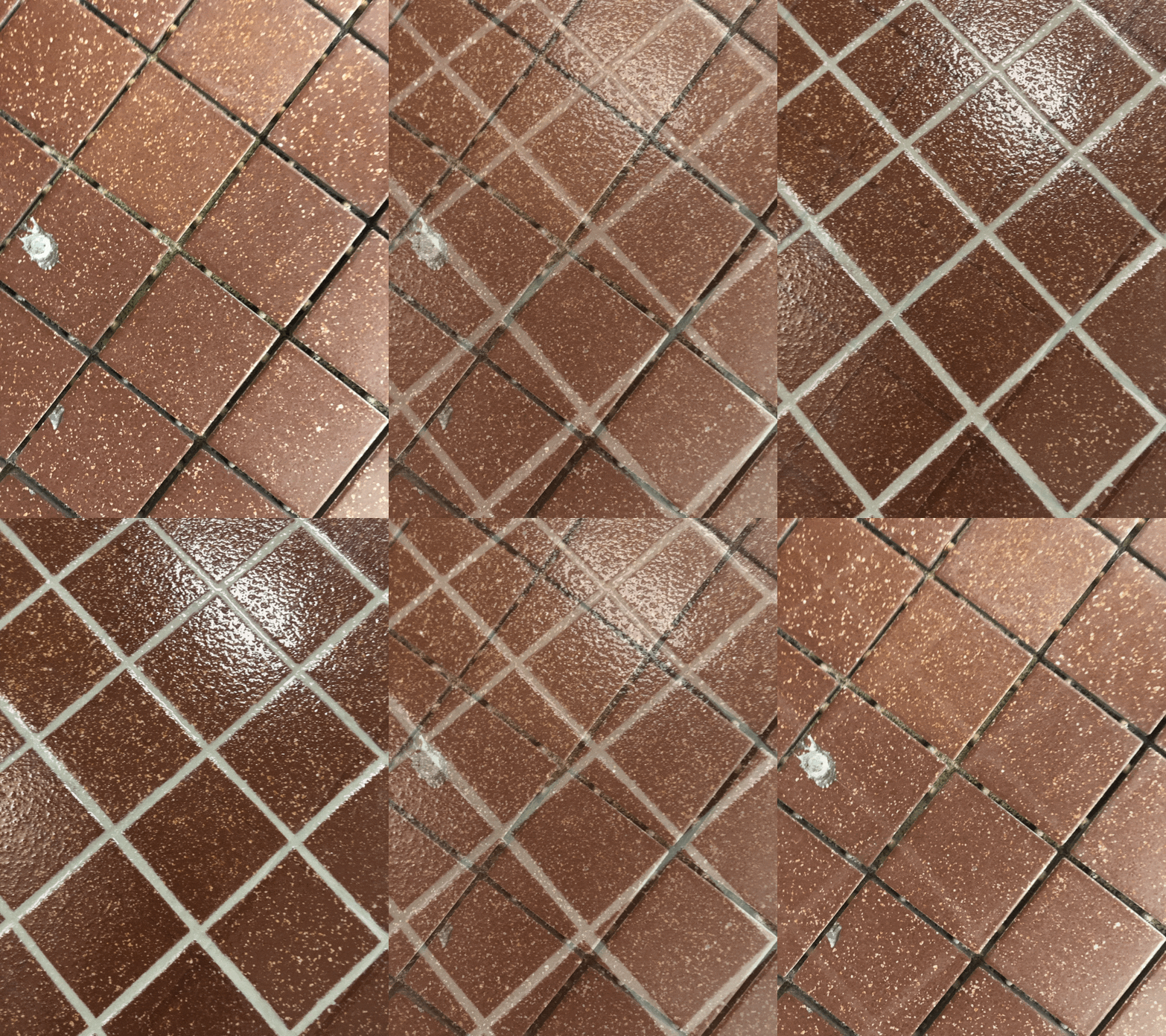
Understanding The Hidden Risks Of Porous Hard Surfaces In High-Traffic Environments
Porous hard surfaces are everywhere in commercial facilities—grout lines, natural stone, concrete, quarry tile, terrazzo, masonry, and pavers all share a common structural characteristic: microscopic pores that absorb moisture, contaminants, and soils. These absorption pathways create hidden vulnerabilities that compromise surface integrity, hygiene standards, and long-term facility costs.
What are porous hard surfaces? Porous hard surfaces contain microscopic openings throughout their structure that allow liquids, bacteria, oils, and cleaning chemicals to penetrate below the visible surface layer. Unlike non-porous materials such as glazed ceramic tile or polished metal, porous surfaces act like sponges—absorbing everything that contacts them and storing contaminants within the substrate where conventional cleaning cannot reach.
In high-traffic commercial environments—restrooms, locker rooms, showers, kitchens, lobbies, athletic facilities, healthcare spaces, educational institutions, hospitality properties, and government buildings—these porous surfaces face constant exposure to moisture intrusion, chemical cleaners, body oils, food soils, and bacterial contamination. The result is a progressive deterioration cycle that begins invisibly and accelerates over time.
Grout lines represent the most vulnerable porous surface in commercial tile installations. Even when tiles themselves are non-porous, the cementitious grout between them absorbs moisture and contaminants at rates that create persistent staining, discoloration, odor retention, and bacterial growth. Natural stone surfaces—including marble, limestone, travertine, and slate—contain inherent porosity that allows permanent staining from acidic substances and moisture-driven deterioration that compromises structural stability.
Concrete floors in commercial facilities demonstrate porosity challenges at scale. Without protective finishing, concrete absorbs oils, chemicals, and moisture that create permanent discoloration, surface spalling, and subsurface damage that shortens lifecycle and increases replacement frequency. Quarry tile, terrazzo, masonry, and pavers used in commercial applications all exhibit similar absorption characteristics that create hidden maintenance challenges.
The hidden risk lies not in what facility managers can see, but in what accumulates beneath the surface. Moisture intrusion creates subsurface bacterial colonies that produce persistent odors even after surface cleaning. Absorbed oils and soils create bonding agents that attract additional contamination, accelerating visible deterioration. Chemical cleaners penetrate porous surfaces and remain trapped in the substrate, creating long-term degradation that weakens material integrity.
Facility managers, maintenance directors, and operations teams typically discover these hidden risks only after visible deterioration appears—darkened grout lines that resist cleaning, stained concrete that looks perpetually dirty, natural stone that has lost its original appearance, and persistent odors that indicate subsurface contamination. By this point, the damage extends far beyond surface-level issues and requires systematic restoration rather than routine maintenance.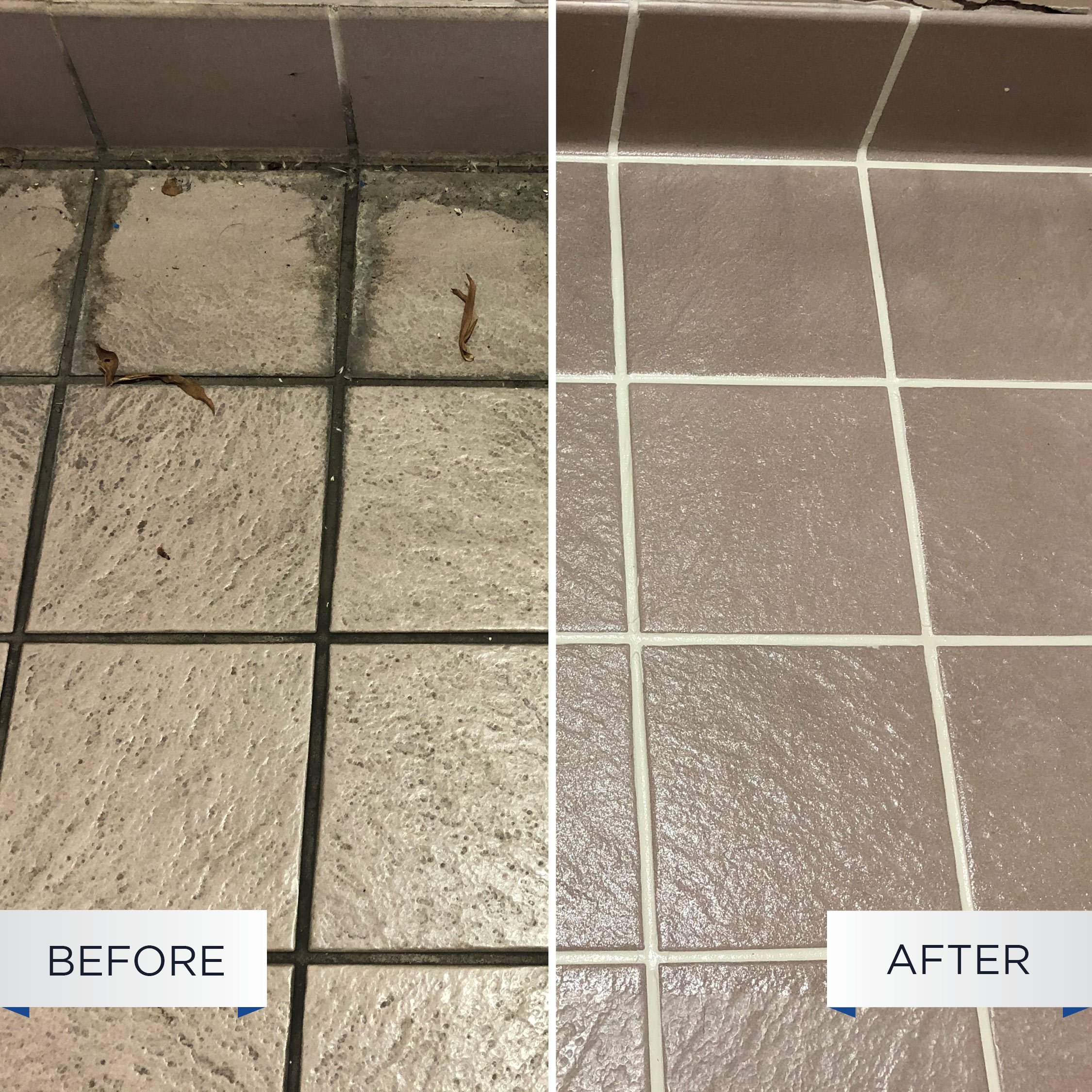
How Moisture Intrusion And Contaminant Absorption Compromise Surface Integrity
Moisture intrusion represents the primary mechanism through which porous hard surfaces deteriorate in commercial facilities. Water molecules penetrate microscopic pores and create subsurface conditions that enable bacterial growth, mold colonization, efflorescence formation, and structural degradation that progresses from invisible damage to visible failure.
When moisture penetrates grout lines in commercial restrooms, showers, or locker rooms, it creates subsurface moisture reservoirs that never fully dry between exposures. These trapped moisture pockets provide ideal environments for bacterial proliferation and mold growth that produce persistent odors, dark discoloration, and biological contamination that compromises hygiene standards. No amount of surface cleaning can address contamination that exists within the grout substrate itself.
Contaminant absorption compounds the moisture problem by introducing oils, soils, cleaning chemicals, and organic matter into porous surfaces where they become permanently embedded. In commercial kitchens, grease and food oils penetrate concrete and quarry tile surfaces, creating permanent staining and slip hazards. In athletic facilities and locker rooms, body oils and personal care products absorb into grout and natural stone, creating darkened areas that resist conventional cleaning methods.
The chemical interaction between absorbed moisture and cementitious materials creates efflorescence—white crystalline deposits that appear on grout lines, concrete, and masonry surfaces as water-soluble salts migrate through porous materials and crystallize at the surface. This visible deterioration indicates ongoing subsurface damage that weakens material bonds and accelerates long-term degradation.
Freeze-thaw cycles in facilities with exterior porous surfaces or unheated spaces create mechanical damage as absorbed moisture expands and contracts, creating micro-fractures that accelerate porosity and compound absorption rates. Each freeze-thaw cycle increases surface vulnerability and shortens overall lifecycle. Terrazzo and natural stone installations in building entries, parking structures, and unheated facilities face particularly aggressive deterioration from this mechanism.
Chemical cleaners used in routine facility maintenance create their own absorption challenges. Harsh alkaline or acidic cleaning solutions penetrate porous grout and natural stone, remaining in the substrate where they cause long-term chemical degradation that weakens material structure and creates discoloration. Bleach-based cleaners commonly used in restrooms penetrate grout lines and create subsurface chemical reactions that yellow or darken grout over time—creating the opposite of the intended cleaning effect.
The progressive nature of moisture intrusion and contaminant absorption means that porous surfaces deteriorate at accelerating rates over time. Initial absorption creates pathways for additional penetration. Surface degradation increases porosity. Weakened material structure allows deeper penetration. The result is an exponential deterioration curve that transforms new installations into aged, stained, and unsanitary surfaces within a fraction of their intended lifecycle.
Facility managers face a critical decision point when moisture intrusion and contaminant absorption compromise surface appearance and hygiene. Traditional approaches involve either accepting ongoing deterioration and increasing maintenance frequency, or undertaking costly demolition and replacement. Advanced protective finishing systems offer a third alternative—systematic restoration that addresses both visible deterioration and subsurface contamination while creating protective barriers that prevent future absorption.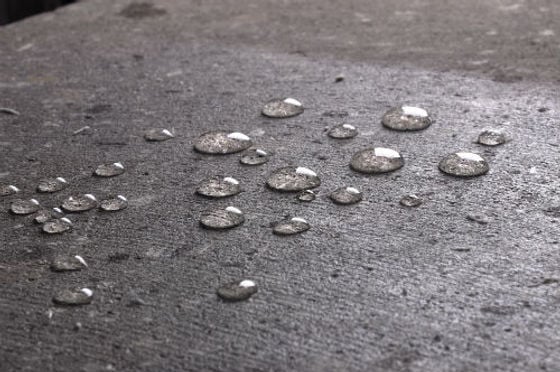
The Critical Role Of Advanced Protective Finishing In Lifecycle Extension
Advanced protective finishing systems transform porous hard surfaces from vulnerable absorption pathways into sealed, protected assets that resist moisture intrusion, repel contaminants, and extend surface lifecycle by decades. The critical distinction lies in understanding how penetrating impregnating sealers differ from topical coatings, when each approach is appropriate, and why professional surface preparation determines long-term performance.
What is an impregnating sealer? An impregnating sealer—also called a penetrating sealer—consists of specialized polymers suspended in a carrier solution that penetrates into the microscopic pores of grout, natural stone, concrete, quarry tile, terrazzo, masonry, and other absorbent surfaces. Once inside the substrate, the polymers cure and create a subsurface barrier that blocks moisture and contaminant absorption while preserving the natural appearance and breathability of the material. Unlike topical coatings that sit on the surface, impregnating sealers work from within the material structure itself.
SaniGLAZE has developed state-of-the-art impregnating sealer technology specifically engineered for commercial facility applications where performance requirements exceed residential-grade products. SaniSEAL Super Impregnator represents the advanced protective finishing solution that facility managers, maintenance directors, and operations teams require for high-traffic commercial environments.
What is SaniSEAL Super Impregnator? SaniSEAL Super Impregnator is a professional-grade penetrating sealer formulated to protect grout lines and porous hard surfaces from moisture intrusion, staining, bacterial buildup, and long-term deterioration. It penetrates deeply into substrate pores and creates an invisible protective barrier that maintains the natural look and texture of the material while dramatically improving resistance to absorption. SaniSEAL Super Impregnator is designed for commercial applications and applied by trained SaniGLAZE Service Providers who understand proper surface preparation and application techniques required for optimal performance.
The protective mechanism works at the molecular level. SaniSEAL Super Impregnator's specialized polymer molecules penetrate porous surfaces and bond within the substrate structure. As the carrier solution evaporates, the polymers cure and create a three-dimensional network that occupies the microscopic pores and capillaries that would otherwise absorb moisture and contaminants. This subsurface barrier blocks absorption pathways while allowing vapor transmission—the material can still breathe, preventing subsurface moisture entrapment that could cause material damage.
What surfaces can be sealed with impregnating sealers? SaniSEAL Super Impregnator is formulated for use on grout lines of all types, natural stone surfaces including marble, granite, limestone, travertine, and slate, concrete floors and walls, quarry tile installations, terrazzo surfaces, masonry and brick, pavers used in commercial applications, and other absorbent hard surfaces where moisture and contaminant absorption creates maintenance challenges. The sealer is particularly effective on grout lines in commercial restrooms, showers, locker rooms, and kitchens where moisture exposure is constant and bacterial growth is a persistent concern.
Where should porous surface sealing be used in commercial facilities? Advanced protective finishing with impregnating sealers provides critical lifecycle extension in restroom floors and walls where moisture and bacterial contamination create hygiene challenges, shower and locker room facilities in athletic complexes, schools, universities, and hospitality properties, commercial kitchen floors where grease and food soil absorption creates permanent staining, building lobbies and entries with natural stone or terrazzo surfaces exposed to weather and foot traffic, healthcare facility floors and walls requiring enhanced cleanability and infection control support, food service areas where sanitation standards demand sealed, non-absorbent surfaces, and any high-traffic commercial space where unsealed porous surfaces face accelerated deterioration.
The difference between sealing and coating represents a fundamental distinction in protective finishing approaches. Impregnating sealers like SaniSEAL Super Impregnator penetrate into the substrate and work from within, preserving the natural appearance, texture, and slip resistance of the original material. Topical coatings sit on the surface and create a film layer that changes the appearance, adds gloss or sheen, and may alter slip resistance characteristics. Both approaches have appropriate applications—the critical factor is matching the technology to the facility requirement and surface condition.
Can sealing help avoid replacement costs? Advanced protective finishing with impregnating sealers extends the lifecycle of existing porous hard surfaces and defers or eliminates costly demolition and replacement. Facility managers facing stained, deteriorated grout lines or damaged natural stone surfaces often assume replacement is the only solution. Professional deep cleaning followed by application of SaniSEAL Super Impregnator restores surfaces to like-new appearance while creating protective barriers that prevent future deterioration—achieving results that rival replacement at a fraction of the cost and without operational downtime.
Professional cleaning and surface preparation are critical before applying any impregnating sealer. Surface contaminants, existing sealers, waxes, soils, and residues must be completely removed to allow proper penetration and bonding. SaniGLAZE Service Providers utilize advanced cleaning systems and preparation techniques to ensure optimal sealer performance. This professional preparation represents the difference between temporary surface treatment and long-term protective finishing that delivers measurable lifecycle extension.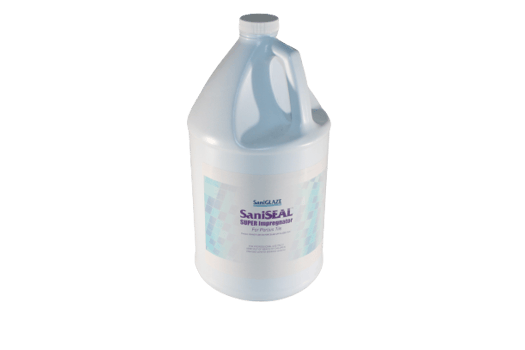
Why Traditional Cleaning Methods Fall Short For Unsealed Tile And Grout
Traditional cleaning methods fail to address the fundamental vulnerability of unsealed porous surfaces—they clean what is visible on the surface while leaving subsurface absorption pathways open to continued contamination. Facility maintenance teams can scrub, mop, and apply chemical cleaners repeatedly, yet unsealed grout lines remain darkened, concrete floors retain staining, and natural stone surfaces continue to absorb contaminants. The limitation lies not in cleaning effort or frequency, but in the structural porosity of the materials themselves.
Routine mopping and surface cleaning remove surface-level soils and contaminants but cannot extract what has already absorbed into porous grout, concrete, or natural stone. Each cleaning cycle may temporarily improve appearance, yet the underlying absorption continues. Moisture from cleaning solutions penetrates unsealed surfaces and introduces additional water into the substrate, often compounding bacterial growth and subsurface contamination rather than eliminating it.
Chemical cleaners used in conventional facility maintenance create their own challenges for unsealed porous surfaces. Harsh alkaline degreasers or acidic cleaners may remove surface soils, but they also penetrate into grout lines and natural stone where they remain trapped in the substrate. Over time, these absorbed cleaning chemicals cause discoloration, material degradation, and progressive weakening of surface integrity. Bleach-based sanitizers commonly used in restrooms penetrate unsealed grout and create chemical reactions that yellow or darken grout lines—the opposite of the intended cleaning effect.
Pressure washing and mechanical scrubbing can remove surface buildup on unsealed concrete or masonry, but these aggressive methods also drive moisture and contaminants deeper into porous substrates while creating surface damage that increases porosity. The temporary appearance improvement achieved through aggressive cleaning accelerates long-term deterioration by opening additional absorption pathways and weakening material structure.
How does sealing improve cleanability? When porous surfaces are protected with advanced impregnating sealers like SaniSEAL Super Impregnator, the fundamental cleaning challenge changes. Sealed surfaces no longer absorb moisture, oils, and contaminants—instead, soils remain on the surface where routine cleaning methods can effectively remove them. Mopping becomes more efficient because contaminants do not penetrate into the substrate. Chemical cleaners work as intended because they interact only with surface soils rather than absorbing into the material. The result is faster, more effective cleaning that maintains appearance with less labor and fewer harsh chemicals.
Sealed grout lines in commercial restrooms demonstrate the cleanability transformation most dramatically. Unsealed grout absorbs everything—moisture, bacteria, urine, cleaning chemicals, and mineral deposits—creating dark, stained lines that resist even aggressive scrubbing. Once properly cleaned and sealed with SaniSEAL Super Impregnator, the same grout lines repel absorption and remain clean with routine mopping. Maintenance teams report dramatic reductions in cleaning time and chemical usage when working with properly sealed surfaces.
The economic impact of improved cleanability extends beyond labor savings. Sealed surfaces require less frequent deep cleaning, reducing both direct cleaning costs and the operational disruption associated with intensive maintenance procedures. Chemical usage decreases because routine cleaning achieves results that previously required aggressive treatments. Surface lifecycle extends because daily cleaning no longer drives contaminants deeper into the substrate or causes progressive material degradation.
Traditional cleaning methods will always fall short for unsealed porous surfaces because they address symptoms rather than the underlying structural vulnerability. Advanced protective finishing with professional-grade impregnating sealers transforms the cleaning equation by eliminating absorption pathways and creating surfaces that respond to conventional maintenance as intended. The investment in proper sealing generates ongoing returns through reduced cleaning costs, improved hygiene outcomes, and extended surface lifecycle.
SaniGLAZE Restoration Processes: Engineered Solutions For Permanent Surface Protection
SaniGLAZE has developed a comprehensive Treatment System for commercial hard surface restoration that integrates advanced cleaning technology, professional surface preparation, specialized impregnating sealers, and protective coating systems engineered to work together in harmony. Each SaniGLAZE process combines state-of-the-art products with systematic application methods, backed by 20 years of experience to create innovative alternatives to floor replacement.
The SaniGLAZE approach begins with proper diagnosis of surface condition and contamination. Trained SaniGLAZE Service Providers assess the type of porous surface, extent of deterioration, contamination sources, and facility requirements to determine the appropriate restoration process. This diagnostic phase ensures that the selected treatment addresses both visible deterioration and subsurface damage while meeting facility performance requirements for appearance, cleanability, and durability.
Professional deep cleaning and surface preparation represent the foundation of every SaniGLAZE restoration process. Advanced extraction cleaning systems remove years of accumulated soils, contaminants, and embedded residues that conventional maintenance cannot address. Specialized cleaning solutions break down oils, mineral deposits, bacterial biofilms, and chemical residues without damaging the underlying material. This preparation phase restores the substrate to optimal condition for sealer penetration and bonding.
SaniSEAL Super Impregnator application follows comprehensive surface preparation. Professional application by trained Service Providers ensures proper coverage, adequate penetration time, and optimal curing conditions. The impregnating sealer penetrates deeply into grout lines, natural stone, concrete, and other porous surfaces, creating subsurface barriers that block moisture intrusion and contaminant absorption while preserving natural appearance and breathability.
For surfaces requiring additional protection or appearance enhancement beyond impregnating sealer capabilities, SaniGLAZE offers complementary coating systems that work in harmony with penetrating sealer technology. GroutGLAZE provides permanent grout line protection with color restoration capabilities for installations where grout has deteriorated beyond sealer-only restoration. EnduraGLAZE delivers comprehensive tile and grout restoration with protective topcoats for surfaces requiring maximum durability and stain resistance. ChromaGLAZE enables color transformation and appearance modernization while providing protective finishing.
The distinction between SaniGLAZE restoration processes and conventional sealing or coating applications lies in the systematic integration of cleaning, preparation, penetrating protection, and topical finishing—each component engineered and tested to work together. This integrated approach delivers performance that exceeds the sum of individual components and provides long-term protection that justifies the professional application investment.
What facility managers and maintenance directors must understand: sealing porous hard surfaces does not make them waterproof, stain-proof, or maintenance-free. Advanced protective finishing with SaniSEAL Super Impregnator and complementary SaniGLAZE processes improves resistance to moisture intrusion, enhances stain resistance, and simplifies ongoing maintenance—but proper cleaning and care remain essential. The realistic expectation is dramatically improved performance and extended lifecycle, not elimination of all maintenance requirements.
The SaniGLAZE Service Provider network ensures consistent quality and reliable results across the country. Service Providers go through recertification each year, maintaining expertise in application techniques, surface preparation requirements, and product technology. This systematic quality control protects the brand and ensures that facility managers receive the performance they expect regardless of location.
For commercial facilities facing stained, deteriorated, or unsanitary porous hard surfaces, the decision framework is clear: accept ongoing deterioration and increasing maintenance costs, undertake expensive demolition and replacement with extended downtime and environmental waste, or invest in professional SaniGLAZE restoration that addresses both visible and subsurface damage while creating protective barriers that extend lifecycle and improve long-term maintainability.
Before replacing worn tile and grout, stained concrete, or damaged natural stone, facility managers should contact SaniGLAZE to evaluate restoration alternatives. Professional assessment, systematic cleaning and preparation, application of SaniSEAL Super Impregnator, and complementary protective finishing systems deliver results that rival replacement at a fraction of the cost—transforming porous hard surfaces into durable, hygienic assets that extend lifecycle value and reduce total cost of ownership..jpg?width=2500&height=1308&name=EnduraGLAZE%20-%20Office%20of%20Education%20Bathroom%20(4).jpg)
Frequently Asked Questions About Sealing Porous Hard Surfaces
Why do porous surfaces need to be sealed?
Porous surfaces contain microscopic openings that absorb moisture, contaminants, oils, bacteria, and cleaning chemicals. This absorption can lead to permanent staining, bacterial growth, odor retention, and progressive deterioration that shortens the surface lifecycle.
Sealing helps block these absorption pathways and protects the substrate from within while maintaining the material’s natural appearance and breathability.
What is the difference between a penetrating sealer and a topical coating?
A penetrating sealer, also called an impregnating sealer, absorbs into the substrate and creates a subsurface barrier that blocks absorption while preserving the original appearance, texture, and slip resistance of the material.
A topical coating sits on the surface and creates a film layer that may add gloss, change appearance, or alter surface characteristics. Both technologies have appropriate applications depending on surface condition and facility requirements.
Can sealed surfaces still get dirty?
Yes. Sealing prevents contaminants from absorbing into the substrate, but surface-level soiling can still occur.
The key difference is that sealed surfaces are far easier to clean because soils remain on the surface rather than penetrating into the material. Routine mopping and cleaning can effectively maintain sealed surfaces, while unsealed surfaces absorb contaminants that resist conventional cleaning methods.
Will sealing make my floors slippery?
Properly applied impregnating sealers like SaniSEAL Super Impregnator do not change the surface texture or slip resistance characteristics of porous materials because they work from within the substrate rather than creating a surface film.
Topical coatings may alter slip resistance depending on their formulation and finish characteristics. Professional SaniGLAZE Service Providers select appropriate products and can incorporate slip-resistant additives when required for safety compliance.
How long does sealer protection last?
The longevity of impregnating sealer protection depends on traffic levels, cleaning practices, and exposure conditions.
In typical commercial facility applications, professionally applied SaniSEAL Super Impregnator provides approximately 3–5 years of effective protection before reapplication is recommended. High-traffic areas may require more frequent resealing, while lower-traffic spaces may maintain protection longer.
Regular maintenance and proper cleaning practices help maximize sealer lifespan.
Can I seal surfaces myself, or do I need a professional?
Professional application by trained SaniGLAZE Service Providers is strongly recommended for commercial facilities.
Proper surface cleaning and preparation are critical to sealer performance and often require specialized equipment and expertise. Professional application helps ensure correct product selection, adequate coverage, proper penetration time, and optimal curing conditions.
The investment in professional application can deliver long-term performance that often justifies the cost difference compared to DIY approaches that may fail prematurely due to improper preparation or application.
Will sealing fix cracked or damaged grout?
No. Sealing protects intact grout from moisture intrusion and contamination, but it does not repair structural damage.
Cracked, missing, or severely deteriorated grout should be repaired or replaced before sealing. SaniGLAZE Service Providers can assess grout condition and recommend appropriate restoration processes that may include repair work before protective sealing.
Can natural stone be sealed without changing its appearance?
Yes. Impregnating sealers like SaniSEAL Super Impregnator are specifically formulated to penetrate natural stone and protect from within while preserving the original color, texture, and natural appearance of the material.
Some natural stones may exhibit slight color enrichment when sealed, similar to the appearance of the stone when wet. This enhancement is often desirable because it can bring out the natural beauty of the stone.
Is sealing environmentally responsible?
Yes. Sealing and restoring existing porous surfaces can reduce the need for demolition and replacement, helping limit construction waste sent to landfills.
Extending the lifecycle of existing surfaces through protective sealing also reduces resource consumption associated with manufacturing, transporting, and installing replacement materials. Professional-grade sealers like SaniSEAL Super Impregnator support facility sustainability initiatives by helping preserve existing assets.
What is the cost difference between sealing and replacement?
Professional sealing and restoration with SaniGLAZE processes typically costs 60–80% less than demolition and replacement of tile, grout, and hard surfaces.
Beyond direct cost savings, sealing can reduce downtime associated with demolition and reconstruction, avoid disposal fees for removed materials, and extend the useful life of existing surfaces. For structurally sound surfaces that have deteriorated in appearance or cleanability, the total cost of ownership often strongly favors professional restoration over replacement.
How soon can sealed surfaces be used after application?
Curing time varies depending on the sealer formulation, environmental conditions, and substrate characteristics.
Impregnating sealers like SaniSEAL Super Impregnator typically allow light foot traffic within 2–4 hours and full service resumption within 24 hours. Professional SaniGLAZE Service Providers provide specific guidance based on the application and facility requirements to help minimize operational disruption.
Do sealed surfaces still need regular cleaning?
Yes. Sealing improves cleanability and resistance to staining, but it does not eliminate the need for routine maintenance.
Sealed surfaces should be cleaned regularly using appropriate pH-neutral cleaners and proper techniques. The advantage is that sealed surfaces respond more effectively to routine cleaning and typically require less aggressive methods or harsh chemicals compared to unsealed porous materials.
Can old sealer be removed if I want to reseal?
Yes. Existing sealers, waxes, or coatings can be removed through professional stripping processes before resealing.
SaniGLAZE Service Providers have the specialized equipment and expertise to properly remove old protective treatments and prepare surfaces for new sealer application. This preparation is essential when previous sealing has failed or when upgrading to higher-performance protective systems.
Where can I learn more about SaniGLAZE restoration for my facility?
Contact SaniGLAZE to connect with expert Service Providers who can assess your facility’s porous hard surfaces, explain appropriate restoration processes, and provide professional guidance on protecting tile, grout, natural stone, concrete, and other absorbent surfaces.
Before replacing stained or worn hard surfaces, discover how SaniGLAZE restoration can deliver like-new results while extending lifecycle value and reducing total cost of ownership.