
 Schedule a Consultation!
Hospital floors take a beating. Between heavy medical equipment, constant foot traffic, and around-the-clock disinfection protocols, tile and grout surfaces deteriorate faster than most facility managers anticipate. When your hospital floors start showing wear, you face a choice: rip everything out and replace it, or explore tile floor restoration options that can achieve similar results with far less disruption.
The good news is that advanced restoration methods now make it possible to restore tile floors during active operations. SaniGLAZE delivers proven hospital floor restoration through proprietary Treatment Processes that address infection control, patient safety, and operational continuity. This guide breaks down the top seven restoration approaches available to healthcare facility managers in 2026..jpg?width=2393&height=1087&name=ChromaGLAZE%20-%20Hospital%20Bathroom%20(2).jpg)
Quick guide: 7 hospital tile floor restoration options for healthcare facilities
- SaniGLAZE: The best proprietary restoration system for hospitals needing minimal downtime and infection-control compliance
- SOLID Surface Care: A national surface care company offering tile and grout services for multi-site facilities
- Stonhard Resinous Flooring: Poured-in-place flooring systems for facilities planning extensive renovations
- Sheet Vinyl Overlay: Heat-welded vinyl coverings for procedural rooms requiring monolithic surfaces
- Epoxy Coating Systems: Chemical-resistant coatings for laboratories and sterile processing areas
- Deep Cleaning and Resealing: Periodic maintenance protocols for floors in relatively good condition
- Grout Replacement and Color Sealing: Targeted grout restoration for localized damage
How we chose the best hospital tile floor restoration options
Healthcare flooring operates under strict requirements that standard commercial spaces never face. Floors must meet infection control standards, resist harsh disinfectants, and support patient safety. We evaluated these restoration methods based on what matters most to healthcare facility managers.
- Infection control compatibility: The restoration method must support hospital hygiene protocols and create surfaces that resist bacteria, mold, and moisture penetration.
- Operational disruption: Hospitals cannot close patient areas for extended periods. We prioritized methods that allow restoration during active operations with minimal noise and dust.
- Surface durability: Healthcare environments expose floors to heavy rolling loads, chemical disinfectants, and constant cleaning. The restored surface must withstand these conditions.
- Compliance support: Methods should help facilities meet CDC environmental guidelines, Joint Commission standards, and OSHA requirements.
- Long-term value: We considered lifecycle costs, including maintenance requirements and expected longevity, rather than upfront pricing alone.
- Application versatility: Different hospital areas have different needs. We looked for options that work across restrooms, patient rooms, corridors, and procedure areas.
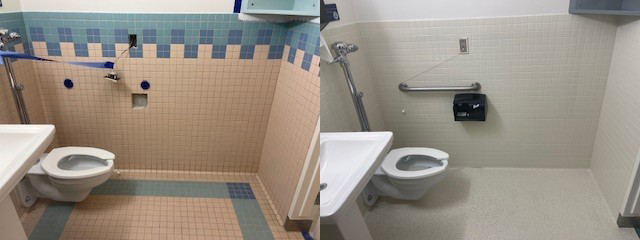
The 7 best hospital tile floor restoration options
1. SaniGLAZE: Best overall tile floor restoration for hospitals
SaniGLAZE represents the leading edge of hospital tile floor restoration. The company has spent more than two decades developing proprietary Treatment Processes specifically for healthcare environments. Their approach combines state-of-the-art products with certified Service Providers who understand the demands of working in active medical facilities.
What makes SaniGLAZE stand apart is the integration between products and application methods. Both the products and the techniques used by Service Providers have been designed and tested to work together in harmony. This means you get consistent results whether restoring a small restroom or an entire wing of patient rooms. The sealed surfaces resist moisture penetration, bacteria growth, and staining while making routine cleaning faster and more effective.
SaniGLAZE delivers restoration results with minimal facility disruption. Their Service Providers coordinate with infection control teams and facility managers to phase work around patient care schedules. The treatment creates a protective barrier over existing tile and grout, eliminating the contamination that accumulates in porous surfaces over time.
SaniGLAZE benefits
- Restorative Bonding Technology: Penetrates and seals porous grout at the molecular level, creating a non-porous barrier that prevents bacteria from harboring in grout lines where MRSA and VRE have been found in hospital studies.
- Low-disruption installation: Work proceeds room by room with minimal noise, no demolition dust, and quick return to service—critical for maintaining patient care during active operations.
- Certified Service Provider network: Service Providers go through recertification each year, ensuring consistent quality and adherence to healthcare protocols across the nationwide network.
- EnduraGLAZE and ChromaGLAZE Treatment Processes: Multiple restoration options address different conditions, from restoring original appearance to completely changing floor color without replacement.
- HCAHPS score support: Visual improvements help hospitals address the cleanliness perception that influences patient satisfaction survey results.
- Sustainable alternative: Restoration extends surface life while avoiding demolition waste, supporting facility sustainability goals.
SaniGLAZE pros and cons
Pros:
- Backed by 20 years of experience in healthcare tile and grout restoration
- Proprietary Treatment Processes designed specifically for infection-control environments
- Nationwide Service Provider network ensures consistent results and local availability
Cons:
- Requires scheduling coordination with certified Service Providers rather than in-house maintenance
- Treatment Process timing varies based on surface condition and area size
- Not designed for severely damaged tile requiring structural repair before restoration
2. SOLID Surface Care: A national option for multi-location healthcare systems
SOLID Surface Care operates as a national surface care company with services spanning carpet, stone, metal, and tile surfaces. Their healthcare division includes hospitals, medical offices, urgent care centers, and senior living facilities. The company positions itself as a consolidated care provider for facilities managing multiple surface types.
SOLID offers tile and grout services including cleaning, coating, replacement, and sealing. Their approach involves developing custom care plans based on facility assessments. For healthcare systems with properties in multiple locations, SOLID can coordinate services across the portfolio.
SOLID Surface Care features
- Multi-surface capabilities: Single vendor relationship for tile, carpet, stone, and other surface types across a facility.
- Custom care plans: Assessment-based programs tailored to individual facility conditions and maintenance schedules.
- National footprint: Services available across multiple geographic regions for healthcare systems with distributed properties.
SOLID Surface Care pros and cons
Pros:
- Handles multiple surface types under one service agreement
- Develops periodic maintenance schedules for ongoing care
- National service capability for multi-site healthcare organizations
Cons:
- Generalist approach covers many surfaces rather than specializing in tile restoration
- Service consistency may vary by location and technician
- Does not offer proprietary restoration chemistry developed specifically for healthcare tile
3. Stonhard Resinous Flooring: Poured-in-place systems for major renovations
Stonhard manufactures and installs resinous flooring systems for commercial and industrial environments. Their healthcare-specific products include options for operating rooms, patient areas, laboratories, and corridors. Stonhard operates as a single-source provider, manufacturing the products and performing installations with their own crews.
For facilities planning substantial renovations or new construction, Stonhard systems offer long-term durability. Their Stonres RTZ product line includes cushioned surfaces designed for staff comfort during long shifts. Installation requires coordination around patient care since poured-in-place systems need cure time before areas return to service.
Stonhard features
- Hygienic surface design: Monolithic flooring without seams where microorganisms can accumulate.
- Ergonomic options: Cushioned flooring systems that reduce fatigue for healthcare workers standing for extended periods.
- Chemical resistance: Formulations that withstand harsh disinfectants used in healthcare cleaning protocols.
Stonhard pros and cons
Pros:
- Single-source responsibility for both products and installation
- Extensive product range for different healthcare applications
- Seamless finished surface supports infection control
Cons:
- Installation requires extended area closure for curing
- Higher project scope than restoration—involves removing existing flooring
- More appropriate for new construction or major renovation than quick restoration
4. Sheet Vinyl Overlay: Heat-welded coverings for procedural spaces
Sheet vinyl flooring, installed with heat-welded seams and coved up walls, creates the monolithic surface that operating rooms and procedure areas require. This approach covers existing flooring with new material rather than restoring what exists beneath. According to Samuels Group healthcare construction guidance, sheet vinyl remains the standard for surgical suites and ICUs where seam elimination matters most.
Installation timing and disruption levels vary based on substrate condition. Facilities with relatively flat existing floors may proceed more quickly than those requiring extensive preparation. The adhesive cure time typically keeps spaces out of service for at least one to two days.
Sheet vinyl overlay features
- Seamless when welded: Heat-welded seams prevent moisture and microorganisms from penetrating between sections.
- Wall coving capability: Material extends up walls for easier cleaning at floor-wall transitions.
- Moisture barrier: Creates waterproof surface over existing flooring materials.
Sheet vinyl overlay pros and cons
Pros:
- Creates code-compliant surfaces for surgical and procedural areas
- Multiple design options including patterns that mimic natural materials
- Covers existing flooring without full demolition in some cases
Cons:
- Areas remain out of service during adhesive cure time
- Substrate preparation may extend project timelines
- Does not address tile and grout that facility managers wish to preserve
5. Epoxy Coating Systems: Chemical-resistant protection for labs and processing areas
Two-component epoxy systems create durable, chemical-resistant floors for laboratories, sterile processing, and other areas exposed to harsh substances. These coatings bond to existing concrete or properly prepared tile substrates. The finished surface resists acids, solvents, and the enzymatic cleaners used in healthcare decontamination.
Epoxy installation requires surface preparation that generates dust and fumes. Facilities must plan for temporary area closures and coordinate with infection control to contain the work zone. Once cured, epoxy floors offer long service life with minimal ongoing maintenance.
Epoxy coating features
- Chemical resistance: Withstands exposure to laboratory chemicals and healthcare disinfectants.
- Abrasion durability: Holds up under heavy cart traffic and equipment movement.
- Slip resistance options: Aggregate additives create traction without compromising cleanability.
Epoxy coating pros and cons
Pros:
- Exceptional durability in demanding laboratory environments
- Creates impermeable surface over concrete substrates
- Customizable colors and finishes including decorative flake systems
Cons:
- Installation generates odors requiring ventilation and area closure
- Surface preparation involves grinding or shot-blasting existing floors
- Not designed for preserving the appearance of existing ceramic tile
6. Deep Cleaning and Resealing: Maintenance protocols for floors in good condition
For tile floors showing surface soiling without structural damage, professional deep cleaning followed by sealer application can restore appearance and extend service life. This approach works when grout lines remain intact and tile surfaces have not deteriorated beyond cosmetic issues. According to CDC environmental infection control guidelines, routine cleaning and maintenance supports overall healthcare hygiene protocols.
The limitation of this approach relates to the porous nature of grout. Standard sealers sit on top of grout surfaces and wear away over time, requiring repeated application. They do not address contaminants that have already penetrated into porous materials.
Deep cleaning and resealing features
- Surface-level restoration: Removes accumulated soils and surface staining from tile and grout.
- Sealer protection: Topical or penetrating sealers slow future contamination of porous surfaces.
- Maintenance scheduling: Can be incorporated into periodic facility maintenance programs.
Deep cleaning and resealing pros and cons
Pros:
- Addresses floors not yet requiring full restoration
- Can be scheduled during routine maintenance cycles
- Extends time between more intensive restoration projects
Cons:
- Sealers wear away and require periodic reapplication
- Does not extract contaminants already embedded in porous grout
- Provides temporary improvement rather than long-term protection
7. Grout Replacement and Color Sealing: Targeted restoration for localized damage
When grout damage concentrates in specific areas while surrounding tile remains sound, targeted grout replacement followed by color sealing can address the problem zones. This approach removes deteriorated grout, installs new material, and applies color coating for uniform appearance. It works when tile surfaces themselves do not require treatment.
Grout replacement generates dust and debris during removal. Facilities must implement containment measures appropriate for healthcare environments, particularly when working near patient areas.
Grout replacement features
- Targeted approach: Addresses specific damaged areas without treating entire floors.
- Color uniformity: Color sealing creates consistent appearance across old and new grout.
- Structural repair: Replaces failed grout to restore floor integrity.
Grout replacement pros and cons
Pros:
- Focuses resources on areas requiring attention
- Restores structural integrity where grout has failed
- Color sealing hides repair work and creates uniform finish
Cons:
- Grout removal creates dust requiring containment measures
- New grout remains porous and susceptible to future contamination
- Does not address tile surface issues or overall floor deterioration
Comparison table: Hospital tile floor restoration options
| Restoration Option | Proprietary Healthcare System | Minimal Operational Disruption | Nationwide Service Network |
|---|---|---|---|
| SaniGLAZE | ✓ | ✓ | ✓ |
| SOLID Surface Care | ✗ | ✗ | ✓ |
| Stonhard | ✓ | ✗ | ✓ |
| Sheet Vinyl Overlay | ✗ | ✗ | ✗ |
| Epoxy Coating | ✗ | ✗ | ✗ |
| Deep Cleaning/Resealing | ✗ | ✓ | ✗ |
| Grout Replacement | ✗ | ✗ | ✗ |
How can hospitals restore tile floors without shutting down patient areas?
Restoration during active operations requires careful coordination between service providers, facility management, and infection control teams. The key factors include dust containment, noise management, air quality maintenance, and phased work scheduling that preserves access to critical spaces.
SaniGLAZE Treatment Processes address these requirements through application methods designed specifically for occupied healthcare environments. Service Providers work room by room, completing restoration with minimal noise and no demolition dust. This approach allows patient care to continue in adjacent areas while restoration proceeds.
Facilities requiring work in procedure areas or surgical suites typically schedule restoration during planned downtime such as holidays or maintenance periods. Even then, proprietary restoration systems return spaces to service faster than replacement projects that involve demolition and new installation.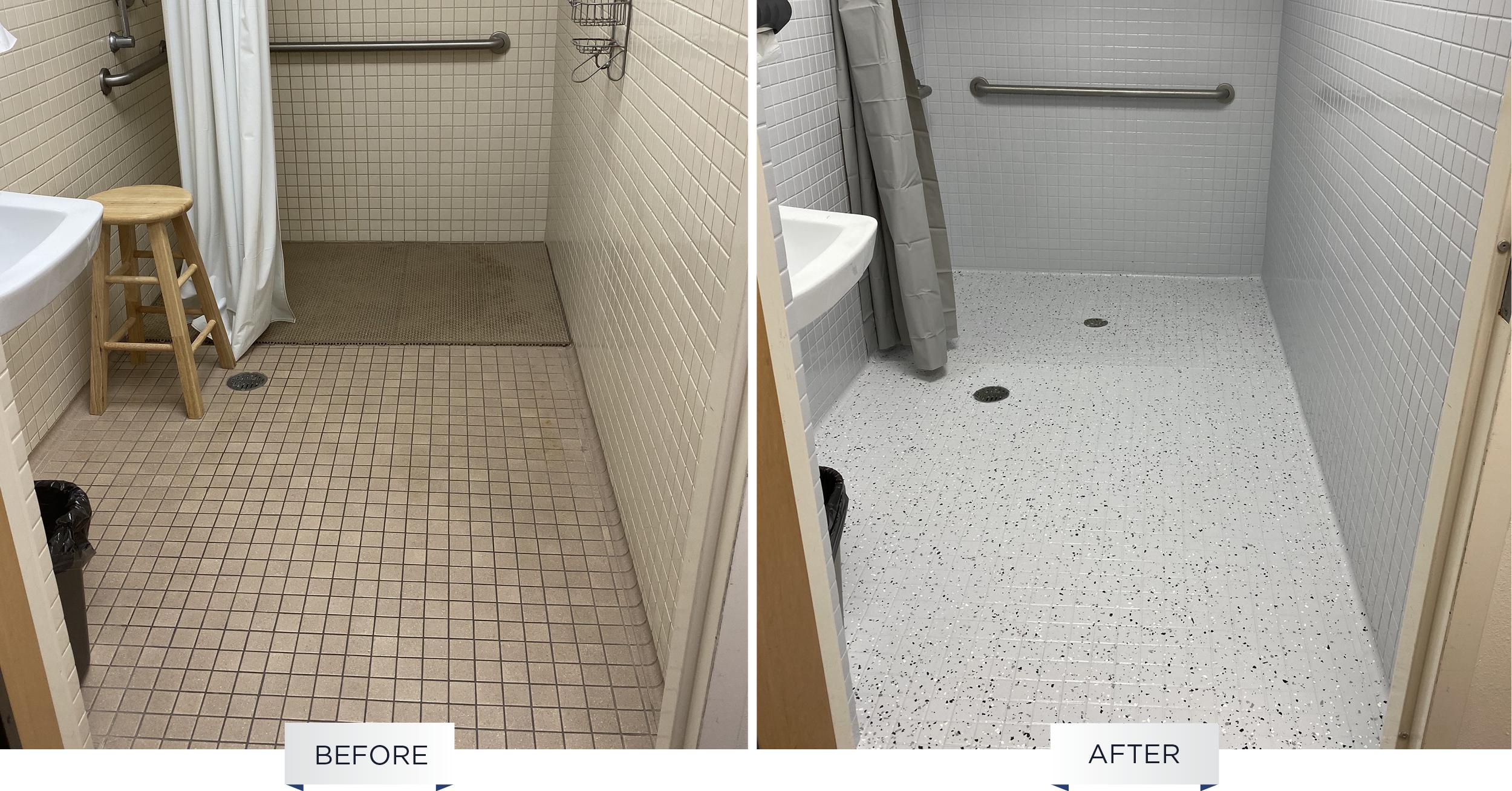
What should healthcare facility managers look for in a tile restoration provider?
Selecting a restoration provider for healthcare environments requires evaluation beyond standard commercial contractor criteria. Look for demonstrated experience in occupied medical facilities, understanding of infection control protocols, and the ability to coordinate with hospital operations teams.
Key evaluation criteria include:
- Healthcare-specific experience: Providers should demonstrate successful projects in hospitals, not just general commercial buildings.
- Certification and training programs: Ask about technician qualifications and ongoing recertification requirements.
- Infection control awareness: Providers must understand ICRA protocols and coordinate with facility infection prevention staff.
- References from similar facilities: Request contact information for healthcare clients who can speak to project execution.
- Insurance and compliance documentation: Verify coverage appropriate for healthcare facility work.
Why SaniGLAZE is the best hospital tile floor restoration option
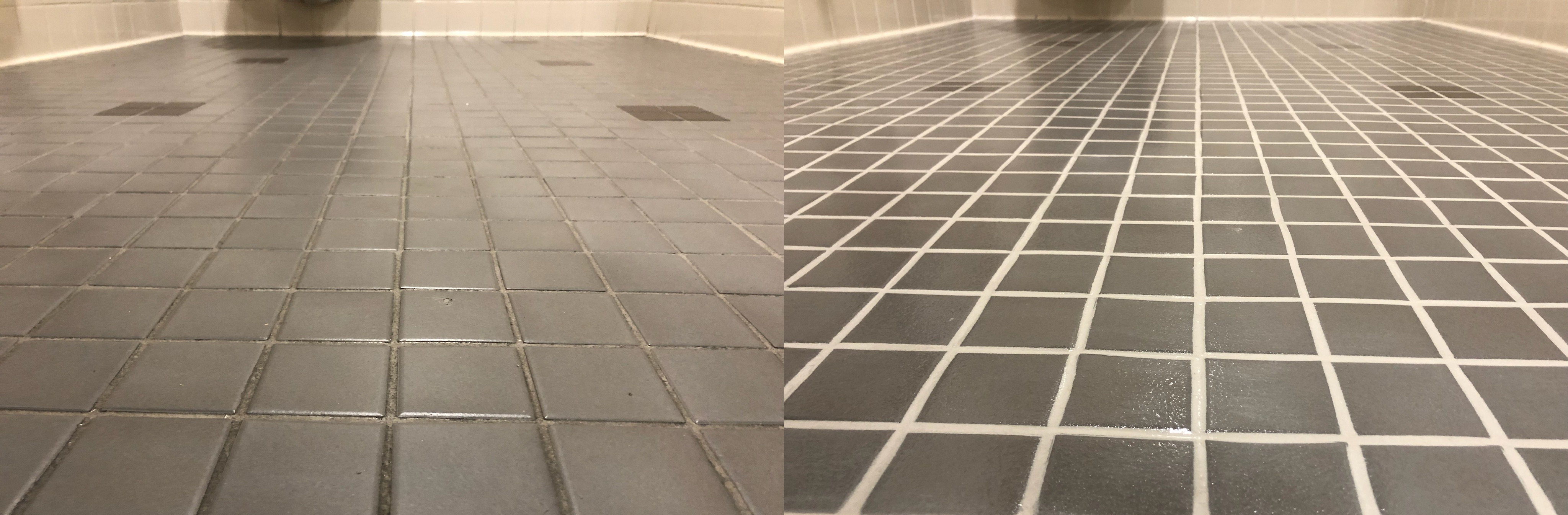
Hospital tile floor restoration demands more than surface-level solutions. Facilities need restoration methods that address the porous nature of grout, support infection control protocols, and allow operations to continue during treatment. SaniGLAZE meets these requirements through proprietary Treatment Processes backed by 20 years of experience in healthcare environments.
The quality of SaniGLAZE Processes are known across the country because both products and techniques have been designed and tested to work together in harmony. This system integration means certified Service Providers deliver consistent results whether working in a small clinic restroom or phasing through an entire hospital wing. The sealed surfaces resist moisture penetration and bacteria growth while making routine cleaning faster and more effective for facility maintenance teams.
For healthcare facility managers facing tile and grout deterioration, SaniGLAZE offers a proven alternative to costly replacement. Contact SaniGLAZE to schedule an assessment and discover how restoration can address your facility's tile floor challenges with minimal disruption to patient care.
FAQs about hospital tile floor restoration options
How long does hospital tile floor restoration take compared to replacement?
Tile floor restoration typically completes in a fraction of the time required for full replacement. SaniGLAZE Treatment Processes allow rooms to return to service quickly, while replacement projects involving demolition, substrate preparation, and new tile installation can keep areas offline for weeks.
Can tile restoration improve HCAHPS scores?
SaniGLAZE restoration creates visible improvements that influence patient perception of facility cleanliness. Many healthcare facilities using SaniGLAZE have reported improvements in the cleanliness-related portions of their patient satisfaction surveys. The restored surfaces look clean and actually are clean, addressing both perception and reality.
Does tile restoration meet healthcare infection control requirements?
SaniGLAZE Treatment Processes create sealed, non-porous surfaces that support infection control protocols. The restoration eliminates the porous grout lines where bacteria like MRSA and VRE have been found harboring even after routine cleaning. This aligns with CDC guidelines for maintaining sanitary healthcare environments.
What types of tile can be restored in hospitals?
SaniGLAZE restores ceramic tile, porcelain tile, quarry tile, and other hard surface flooring materials common in healthcare facilities. The Treatment Processes work on floors, walls, and other tiled surfaces in restrooms, patient rooms, corridors, cafeterias, and other hospital areas.
How often does restored tile flooring need maintenance?
SaniGLAZE restored surfaces require less maintenance than untreated tile and grout. The sealed surface resists staining and soil accumulation, making routine cleaning more effective. Specific maintenance intervals depend on traffic levels and cleaning protocols, but restored floors maintain their appearance far longer than conventional tile.