
 Schedule a Consultation!
Bleach has long been the go-to cleaning product for facility maintenance teams. It’s powerful, fast, and leaves surfaces looking bright—at least temporarily. But while bleach can make grout appear cleaner in the moment, it’s quietly breaking down the very surfaces it’s meant to protect.
For facility managers focused on compliance, appearance, and budget performance, the question isn’t “Does bleach damage grout?” - it’s “How much is it costing us when it does?”
The Effects of Bleach on Grout and Tile
Grout is porous by nature. It’s designed to fill the spaces between tiles, but those tiny pores absorb moisture, bacteria, and cleaning agents over time. When bleach is introduced, its chemical properties don’t just sanitize, they react:
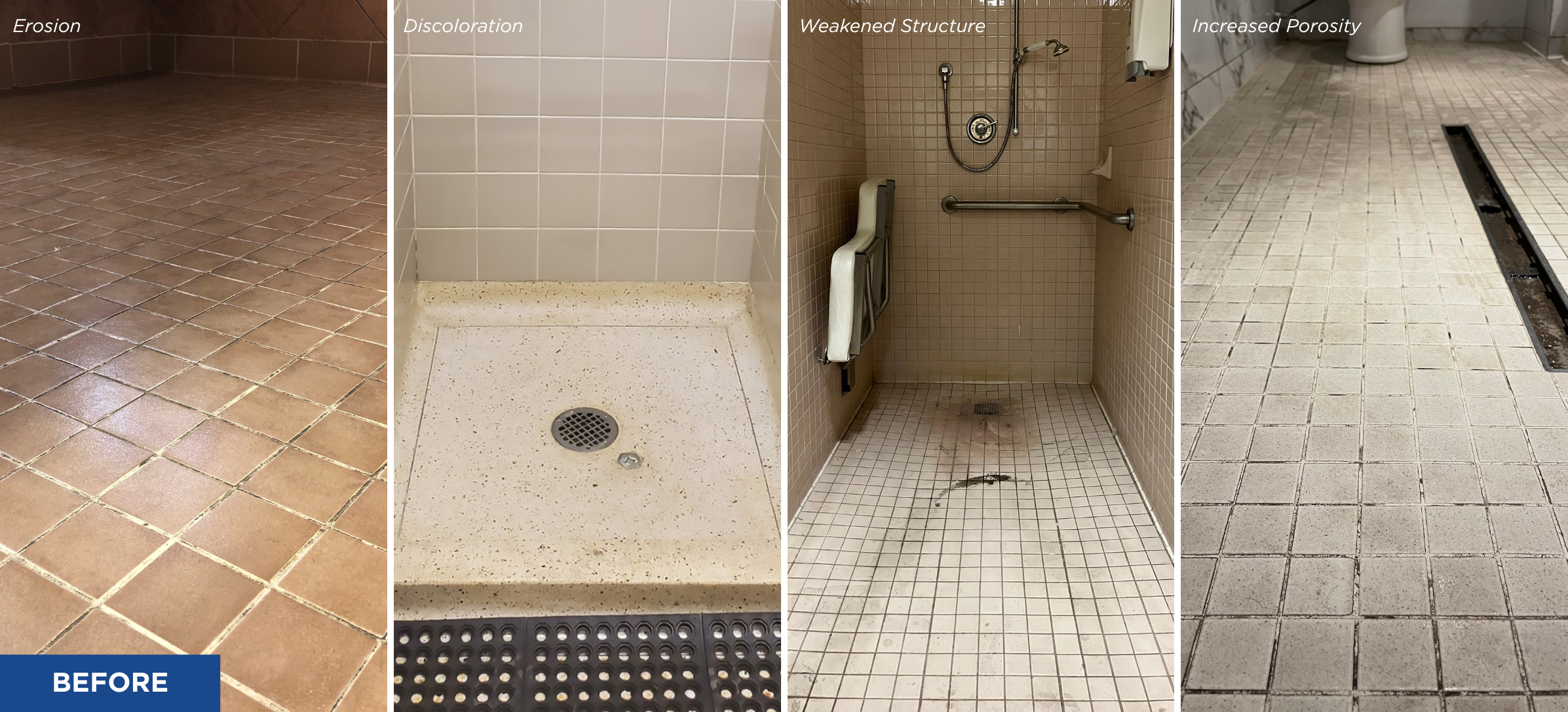
- Erosion of grout sealers: Bleach breaks down protective coatings, leaving grout exposed to moisture and contaminants.
- Surface discoloration: What looks “whiter” at first often turns dull, yellowed, or patchy after repeated use.
- Weakened structure: Continuous chemical exposure causes grout to crumble, chip, or loosen.
- Increased porosity: As sealers degrade, grout absorbs even more bacteria, dirt, and liquids—creating an ongoing cycle of cleaning and damage.
Over time, facilities spend more on deep cleaning, resurfacing, and even replacement—costs that could have been prevented with the right maintenance approach.
The Compliance Risk You Can’t See
Bleach doesn’t just harm grout; it can compromise compliance, too. Damaged grout lines are more than an aesthetic problem—they become breeding grounds for bacteria and moisture that can lead to sanitation violations.
In healthcare, food service, and education environments, these hidden risks can affect both inspection outcomes and public perception.
The irony? The very cleaner used to “sanitize” can make it harder to maintain true cleanliness and safety.
Why Bleach-Based Cleaning Costs More in the Long Run
Bleach feels inexpensive—it’s easy to find, cheap per gallon, and already in most janitorial closets. But the hidden costs add up fast:
- More frequent scrubbing and re-cleaning
- Shorter lifespan of tile and grout
- Downtime for repairs or replacement
- Additional labor and chemical expenses
Bleach is a short-term fix that leads to long-term expense. And as budgets tighten heading into the new year, that’s exactly the kind of inefficiency most facilities can’t afford.
Plan today, save tomorrow. Preventing surface damage is always more cost-effective than repairing it later.
The Safer Alternative: Restore and Protect, Don’t Strip and Replace
The good news? There’s a smarter, safer solution.
SaniGLAZE restoration solutions are engineered to reverse bleach-related damage and eliminate the need for harsh chemicals altogether. Our proprietary processes deep clean and seal existing tile and grout, creating a durable barrier that protects against moisture, staining, and bacterial growth.
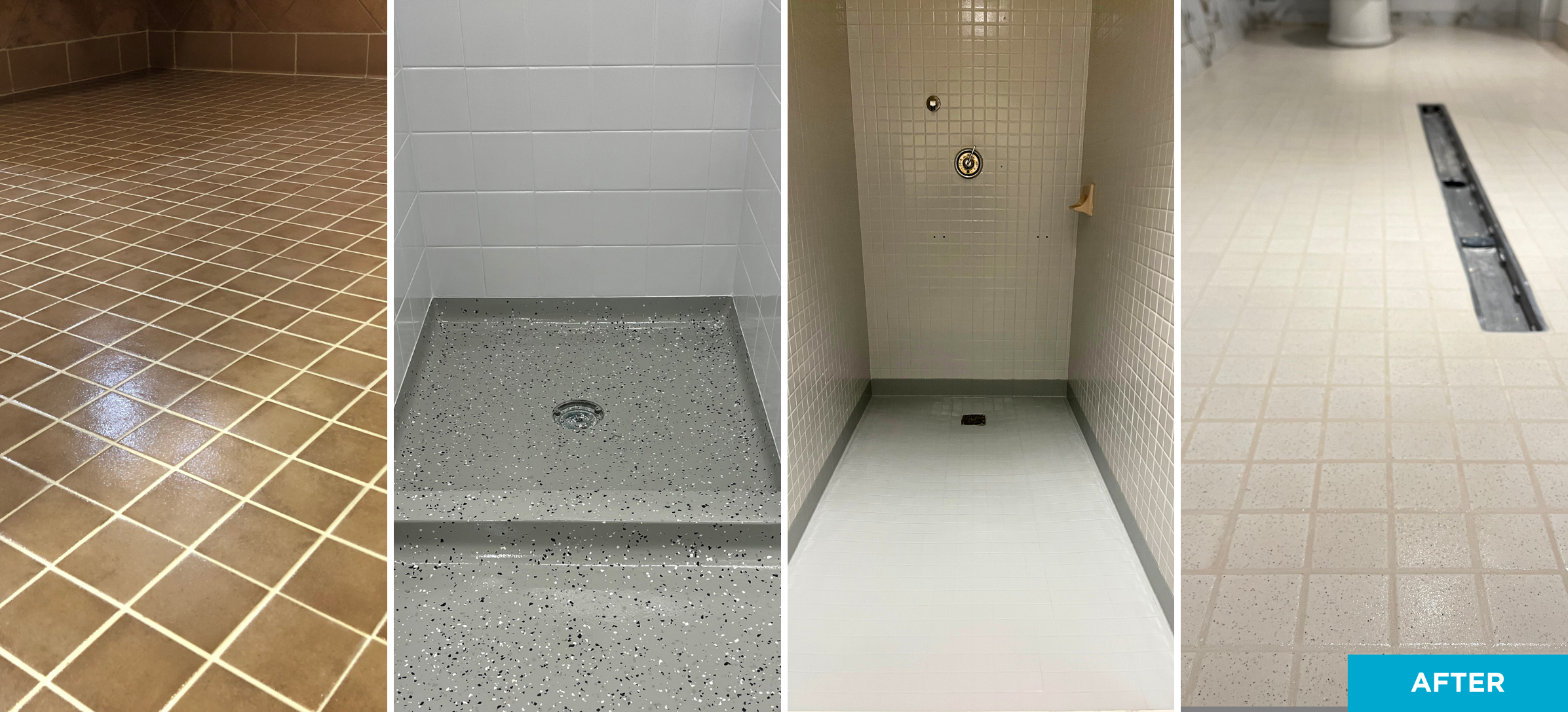
Once treated, surfaces can be maintained easily with neutral pH cleaners—no bleach required. The result:
- Restored appearance without costly replacement
- Extended surface life through long-term protection
- Improved compliance with sanitary and safety standards
- Reduced maintenance costs and cleaning labor
Building a Smarter Cleaning Strategy for 2026
As facilities plan for the upcoming year, it’s the perfect time to review maintenance routines and identify where reactive habits—like relying on bleach—can be replaced with proactive systems that save money and extend performance.
Ask yourself:
- Are our cleaning products protecting our surfaces—or breaking them down?
- How much time and budget are we dedicating to re-cleaning the same areas?
- Could restoration help us prevent compliance issues before they happen?
SaniGLAZE helps facilities answer those questions with professional assessments, cost-saving strategies, and proven restoration solutions that deliver measurable ROI.
Clean Smarter, Not Harsher
Bleach may look like a simple fix, but its long-term impact can erode more than grout—it can eat away at your maintenance budget, compliance score, and facility reputation. The smarter choice is to plan ahead, protect your surfaces, and clean with intention.
SaniGLAZE makes that possible. Restore your tile and grout, eliminate the need for harsh chemicals, and start saving today.
Schedule your facility assessment to learn how restoration can replace costly chemical cycles for good.
Frequently Asked Questions About Bleach, Grout Damage, and Smarter Tile Maintenance
Does bleach damage grout?
Yes. Repeated bleach use can damage grout over time. While bleach may make grout look brighter temporarily, it can break down protective sealers, increase porosity, weaken the grout structure, and make the surface more vulnerable to moisture, staining, bacteria, and soil absorption.
Why does bleach make grout look cleaner at first?
Bleach can temporarily lighten or whiten the surface, which creates the appearance of cleanliness. However, that short-term visual improvement does not mean the grout is being protected. Over time, repeated bleach exposure can leave grout dull, patchy, yellowed, brittle, or more difficult to maintain.
How does bleach affect grout sealers?
Bleach can erode or degrade protective grout sealers. Once the sealer is compromised, the grout becomes more exposed to moisture, contaminants, cleaning chemicals, bacteria, and everyday soils. This can make the grout absorb more material over time and become harder to clean.
Can bleach make grout more porous?
Yes. As bleach breaks down protective coatings and weakens the grout surface, the grout can become more porous. More porous grout absorbs more water, dirt, bacteria, and cleaning residues, which creates a cycle where the surface gets dirty faster and requires more frequent cleaning.
Can bleach cause grout to crumble or loosen?
Repeated chemical exposure can contribute to grout deterioration. Over time, grout may begin to chip, crumble, crack, loosen, or separate from the tile edges. This is especially concerning in commercial restrooms, showers, locker rooms, kitchens, healthcare environments, and other high-moisture areas.
Is bleach safe for commercial tile and grout maintenance?
Bleach may be common in janitorial closets, but it is not always the best long-term maintenance solution for commercial tile and grout. In high-use facilities, repeated bleach-based cleaning can create surface damage, increase labor needs, shorten surface life, and raise long-term maintenance costs.
Why can bleach-based cleaning cost more in the long run?
Bleach may seem inexpensive per gallon, but long-term damage can create hidden costs. Facilities may spend more on repeated scrubbing, deep cleaning, repairs, grout restoration, resurfacing, downtime, and eventual replacement. A short-term cleaning habit can become a long-term maintenance expense.
Can damaged grout create compliance concerns?
Yes. Damaged grout can absorb moisture, bacteria, and contaminants more easily. In healthcare, food service, education, hospitality, fitness, and public facilities, deteriorated grout can make it harder to maintain sanitary conditions and may negatively affect inspections, compliance efforts, and public perception.
Why does grout still look dirty after cleaning?
Grout is porous, so soils and contaminants can become embedded below the surface. Once grout has absorbed dirt, bacteria, residues, or moisture, normal cleaning may only affect the surface while deeper discoloration remains. This is why a floor or wall can look dirty even after regular cleaning.
What should facilities use instead of bleach on restored grout?
After tile and grout have been properly restored and protected, routine maintenance can often be performed with neutral pH cleaners. Neutral pH cleaning helps maintain the surface without relying on harsh chemicals that can degrade protective coatings or damage grout over time.
How does SaniGLAZE help with bleach-damaged grout?
SaniGLAZE helps facilities address bleach-related grout damage through professional tile and grout restoration. The process can include deep cleaning, grout restoration, and protective sealing or coating to help restore appearance, reduce absorption, improve cleanability, and extend the life of the existing surface.
Does SaniGLAZE eliminate the need for harsh chemicals?
SaniGLAZE restoration is designed to make tile and grout easier to maintain without harsh chemical cycles. Once surfaces are restored and protected, soils and contaminants are less likely to penetrate into the grout, allowing facilities to use more controlled maintenance practices.
Is restoration better than replacing damaged tile and grout?
Restoration can be a better option when the existing tile and grout are structurally sound but worn, stained, porous, or difficult to clean. Instead of full demolition and replacement, restoration can reduce downtime, control costs, improve appearance, and extend the useful life of the surface.
When should grout be replaced instead of restored?
Grout may need replacement when it is severely cracked, missing, loose, crumbling, contaminated beyond practical restoration, or associated with deeper substrate or moisture problems. A professional evaluation can determine whether cleaning, restoration, repair, or replacement is the best solution.
What types of facilities should avoid heavy bleach use on grout?
Facilities with high-use tile and grout surfaces should be especially careful with repeated bleach use. This includes hospitals, schools, universities, commercial kitchens, restaurants, locker rooms, showers, hotels, airports, government buildings, fitness centers, stadiums, and public restrooms.
How can a facility reduce grout maintenance costs?
A facility can reduce grout maintenance costs by moving away from reactive bleach-based cleaning and toward a proactive surface protection plan. That may include professional assessment, deep cleaning, grout restoration, protective sealing or coating, staff training, neutral pH cleaners, and a scheduled maintenance program.
How do I know if bleach has damaged my grout?
Signs of bleach-related grout damage may include patchy discoloration, yellowing, dullness, crumbling, cracking, loose grout, persistent odors, recurring staining, and grout lines that become dirty again soon after cleaning. If these issues are present, the surface may need professional restoration instead of more aggressive cleaning.